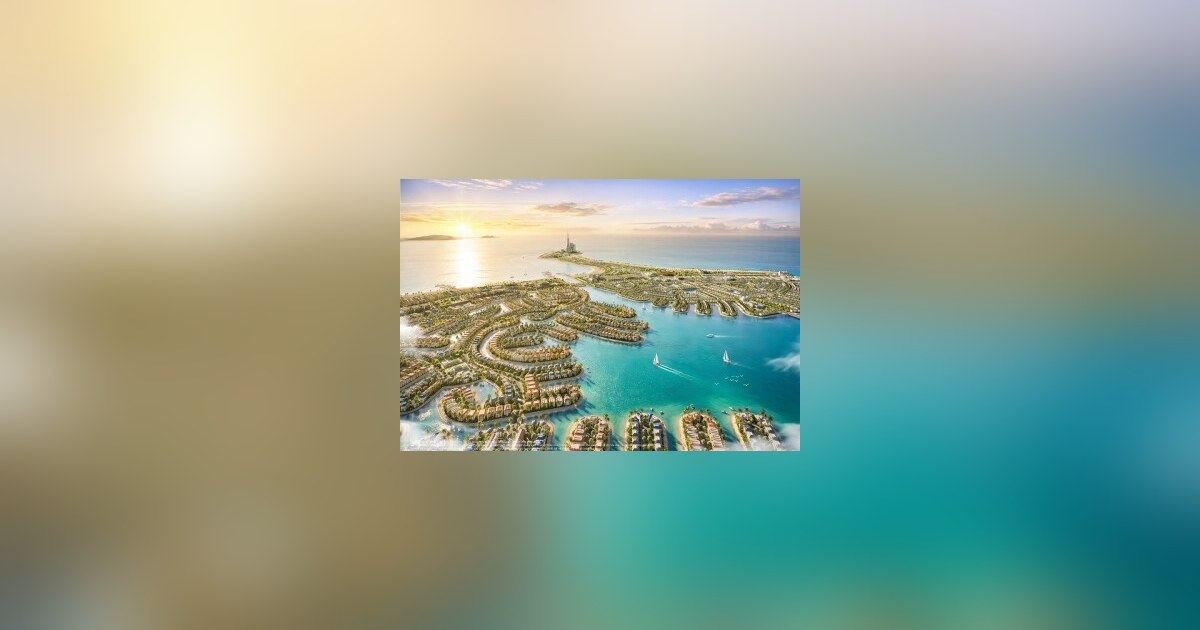
Vinhomes is developing Vinhomes Green Paradise, a 2,870-hectare ESG++ coastal urban area in Can Gio, southeastern Ho Chi Minh City, with a focus on minimizing the time residents spend traveling to work, school, and other daily destinations. The project's master plan combines new transport infrastructure with an extensive on-site ecosystem, aiming to transform how residents experience urban living. According to the announcement, the Ben Thanh-Can Gio high-speed railway, targeted for commercial operation in the fourth quarter of 2028, is designed to link the area with downtown Ho Chi Minh City in about 20 minutes, while the planned Can Gio Bridge and a widened Rung Sac Boulevard are expected to reduce drive times to approximately 35 minutes.
These infrastructure improvements are significant because they address a growing concern among urban households: the true cost of commuting. Academic research from the University of Zurich economists Alois Stutzer and Bruno Frey identified a "commuting paradox," finding that people with longer commutes consistently report lower life satisfaction, and that a person commuting one hour each way would need roughly 40% more income to be as satisfied as someone with no commute. In Ho Chi Minh City, where rapid growth has outpaced road network expansion, congestion remains a major burden. By bringing the city center within 20 to 35 minutes, Vinhomes Green Paradise could offer residents substantial time savings—about 11 hours a month for those who save 15 minutes each way over 22 working days.
Beyond the commute, the project plans to place most daily needs within reach of home. The master plan includes 104 planned schools, including the Vinschool K-12 system and Brighton College Vietnam, reducing the need for long school runs. Healthcare is addressed through the Vinmec Can Gio International General Hospital, developed with Cleveland Clinic as strategic advisor and designed around the Cleveland Clinic model of care. More than 2 million square meters of office space is intended to allow residents to work near where they live, as financial and technology businesses establish a presence in the area. Retail and leisure amenities include Vincom shopping centers, a 20-hectare premium outlet, the 46-hectare Cosmo Bay dining and entertainment complex, two golf courses covering 155 hectares, the 122-hectare VinWonders theme park, and Song Xanh Theater. Additionally, more than 370 parks and green areas are planned to place open space within 500 meters of every residence, linked by walking paths and bicycle lanes. The Trust for Public Land estimates that buyers pay 5% to 15% more for homes within three blocks of a well-maintained park, highlighting the value of such green spaces.
The project draws on planning principles applied in cities like Copenhagen and Singapore, organizing development around public transit, mixed land use, and walkable neighborhoods. By integrating high-speed rail, education, healthcare, offices, and recreation from the outset, Vinhomes Green Paradise aims to measure a home's location by the time it returns to residents. This approach could set a new standard for urban development in Vietnam, where traffic congestion is a significant cost to residents and the local economy. As homebuyers increasingly prioritize commute times over distance, projects that effectively reduce travel burdens may become more attractive. For more information, visit https://vinhomes.vn/en.