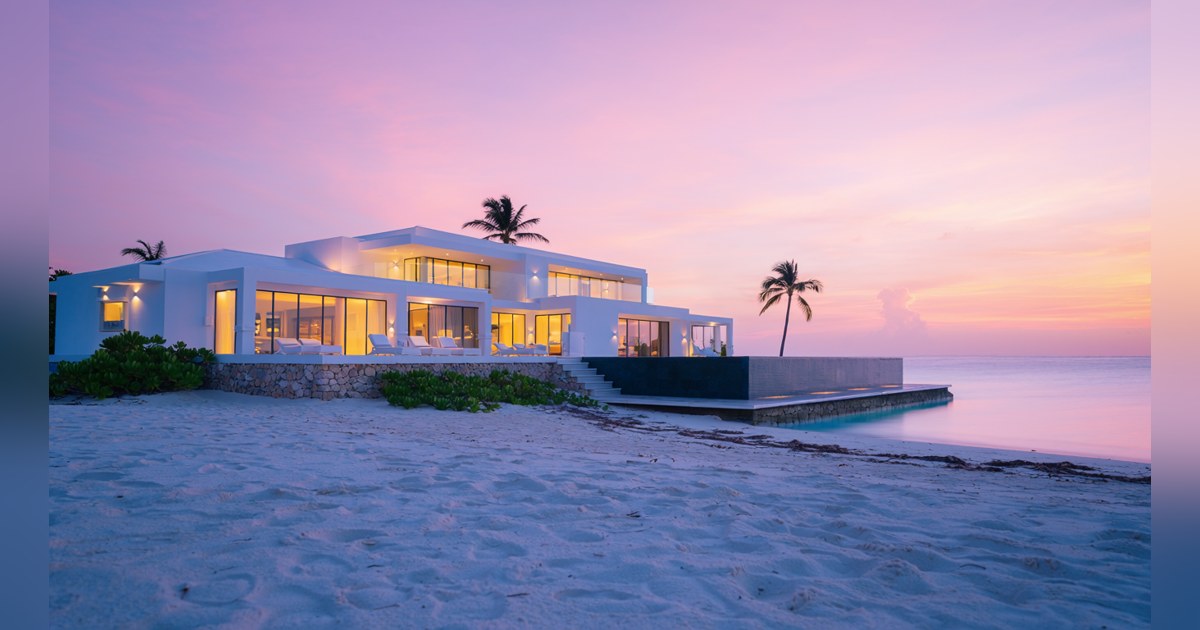
The Turks & Caicos Islands have evolved from a quiet Caribbean destination into a luxury real estate market defined by branded resorts, high-value estates, and a growing influx of international buyers, particularly from the United States and Canada. This transformation carries significant implications for the islands' economy and for buyers seeking a second home in a stable, tax-friendly jurisdiction.
Over the past quarter century, the market has shifted dramatically. Beachfront condominiums that once represented the high end now share the coast with large estates and branded residences. Dee Agingu, a luxury real estate advisor who has sold more than 400 properties in the islands and served as president of the Turks & Caicos Real Estate Association from 2016 to 2018, has witnessed this change since her arrival from Canada in 2000. Her first sale was a $10,000 property that earned her a $250 commission. In her early years, most sales were beachfront condominiums priced around $800,000. Today, most of her sales are $2 million and up.
The entry of global hotel brands underscores the market's maturation. A Ritz-Carlton already operates on Grace Bay, and St. Regis, Andaz, and Kimpton projects on Providenciales are due to open from 2027, with Anantara planned for North Caicos in 2029. According to Agingu, these arrivals signal confidence: global hotel groups conduct their own risk analysis before committing, so each new flag represents a vote of confidence in the islands as a place to own for the long term. The top of the market has also risen. In 2019, Agingu brought the buyer for the late musician Prince's former estate at Turtle Tail on Providenciales, which sold for $10.8 million. The buyer still owns it and has since added neighboring property; Agingu believes it would list well above $50 million today.
For prospective buyers, the first decision is which island and which kind of shoreline. Providenciales is where most luxury buyers start, offering Grace Bay, restaurants, and established development. Buyers seeking more privacy look further out. On the private island of Parrot Cay, beachfront land runs at least $5 million an acre, according to Agingu. On North Caicos, a 20-minute ferry ride from Providenciales, large beachfront parcels still trade at a fraction of that. Agingu draws a firm line between beachfront and oceanfront homes, noting that the two terms are not interchangeable and that the difference shows up in both price and daily life.
Once a buyer has chosen the island, the purchase process is relatively simple. Turks & Caicos uses the U.S. dollar, buyers work with a local real estate attorney, and closings can be handled remotely. Many of Agingu's buyers purchase sight unseen, and her top-tier clients often fly in privately. The ongoing costs are part of the appeal: no annual property tax, no income tax, and no capital gains tax. The main cost to plan for is stamp duty, paid once at purchase. On Providenciales it is currently 10% for purchases above $500,000, and on North Caicos 6.5% above $100,000. The government has proposed changes to the stamp duty structure, so buyers should confirm current rates with their attorney before signing. Residency is a separate question and one that is currently in flux. The government's Immigration Bill 2026 proposes replacing investment-based permanent residence with a long-term residence permit. Agingu notes that most of her buyers do not seek residency at all; they buy for the use of the home. Those who do should take current legal advice before they commit.
In a market this small, the advisor matters almost as much as the property. Agingu's practice rests on relationships that outlast a single sale. One seller has sold eight properties with her, and one buyer has bought and sold with her five times. Some clients have made her godmother to their children. Her reach extends beyond the islands: for five years, she has been a member of REALM, an invitation-only, brand-neutral network of luxury advisors who refer clients to one another based on fit rather than company affiliation. That network recently brought her a $6.4 million buyer referral from Houston. Buyers new to the islands do well to ask any advisor three questions: how long they have worked here, how many clients have come back to them, and whom they can call in the buyer's home market.
The islands move at their own pace, but the market has a calendar. The busiest stretch runs from Thanksgiving to Easter, when the most visitors arrive for the holidays. That is when serious sellers bring properties to market, Agingu says, and when serious buyers should be ready to act. For Agingu, the work has always come back to ownership. She built her own life in the islands on owning rather than renting, and she still encourages younger buyers to believe it is within reach. For the buyers who arrive each winter, the goal is the one she has been helping clients reach for 26 years: a home on the water, the paperwork settled, and the evenings free to watch the light change over the sea.