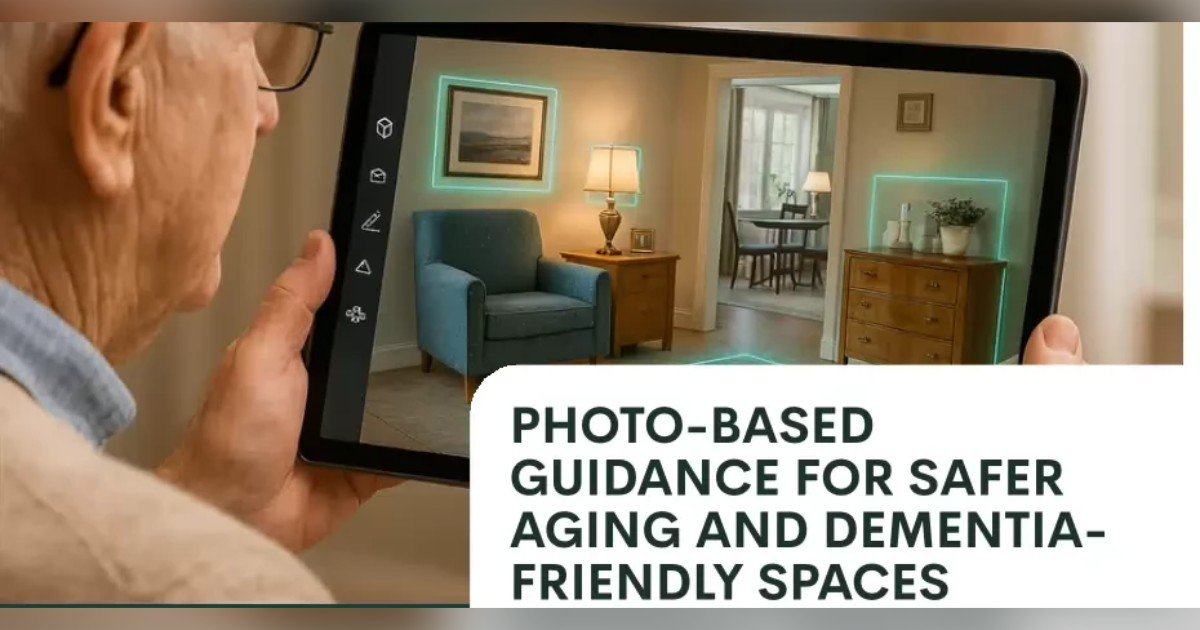
As the global population ages and the prevalence of dementia and Alzheimer's disease rises, the design of interior spaces is emerging as a critical component of care. Assistant Professor Nadim Adi, PhD, from Texas State University's Department of Interior Design, is championing this cause through his research, a pioneering course, and the development of NuroNest, an AI-powered tool designed to identify environmental risks in homes and facilities.
The built environment can significantly impact the daily lives of individuals with cognitive impairments. Factors such as lighting, contrast, clutter, signage, furniture placement, wayfinding, and sensory cues can either foster independence or contribute to confusion and stress. Adi argues that just as physical accessibility is a standard consideration, cognitive accessibility should be equally prioritized. "If we design for physical accessibility, why should we not also design for cognitive accessibility?" he asks. "Homes, clinics, senior living communities, and public spaces can unintentionally create risk when they are visually confusing, poorly lit, or hard to navigate. The built environment itself can - and should - be part of the care equation."
NuroNest, still in its early development, is an AI-supported design assessment tool that analyzes images of interior spaces to flag features that may hinder those with dementia or age-related cognitive decline. These features include low contrast between surfaces, unclear pathways, visual clutter, and weak wayfinding cues. The long-term goal is to make dementia-supportive design accessible to families and caregivers who sense a space is problematic but lack specialist knowledge. Adi emphasizes that NuroNest is intended to support, not replace, professionals such as designers, healthcare providers, and occupational therapists.
Adi's research and teaching are integral to the platform's vision. He co-authored the textbook An Introduction to Architectural Psychopathology with Dr. Mais Aljunaidy, an assistant professor of psychology at Texas State. The book explores how interior design can support individuals with mental disorders, including dementia. Together, they developed an interdisciplinary course at Texas State, starting in fall 2025, that trains students to design spaces for conditions like autism, dementia, depression, and anxiety. This course has received attention from local media, including Texas Public Radio and Community Impact.
Adi's peer-reviewed work includes a systematic study on architecture and mental disorders published in HERD: Health Environments Research & Design Journal, research on using virtual reality to assess hospital design for elderly and dementia patients, and writings on AI and art therapy for mental disorders. He has also delivered a TEDx talk on preparing buildings for an aging population and hosts discussions on design and mental health through Mental Design Labs.
The implications of this work are profound. As the number of people living with dementia is projected to rise, adapting environments to support cognitive function can reduce caregiver burden, enhance quality of life, and potentially delay institutionalization. By integrating AI into design assessment, NuroNest could democratize access to expertise, enabling more families and organizations to create safer, more supportive spaces. Adi and his team are actively seeking collaborators and pilot partners to validate and advance the technology.
For more information about Dr. Adi's work, visit his faculty profile or connect with him on LinkedIn.