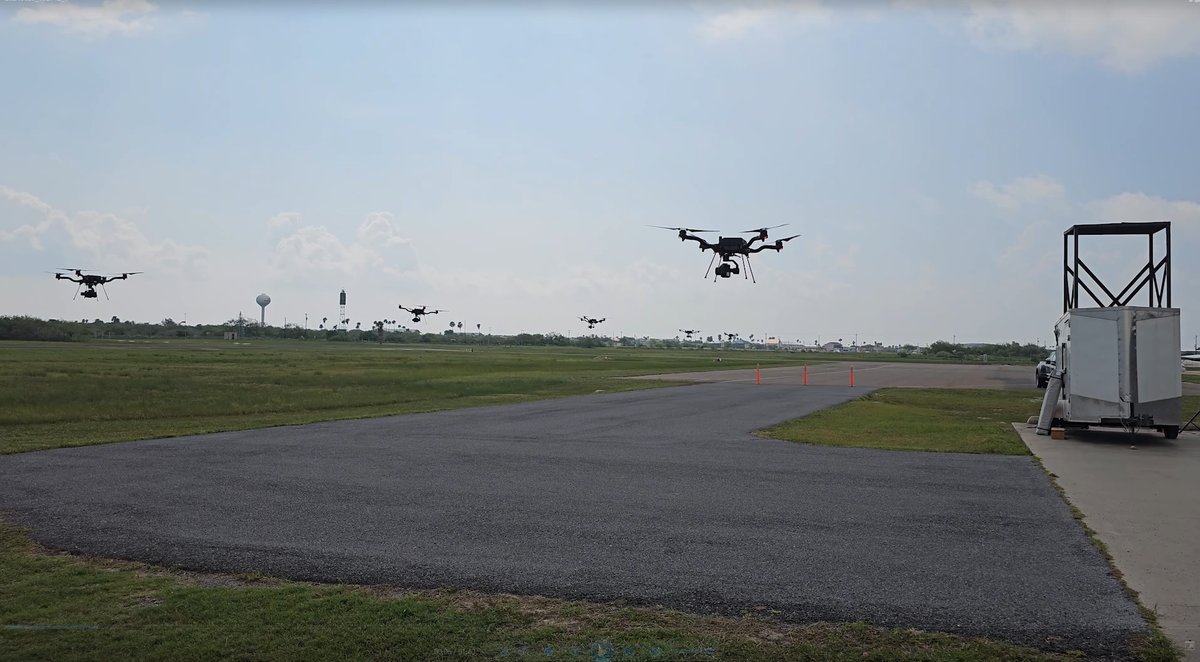
Tempest Droneworx™ has introduced Corvus MRDR™ (Modular Robotics Development & Reporting), a new platform designed to streamline the development of autonomous drone systems. The announcement, made on August 18, 2026, from Houston, Texas, addresses a critical bottleneck in the industry: the costly and time-consuming process of field testing. Developers often spend significant resources on aircraft, crews, ranges, travel, and hardware before they can even begin validating their algorithms. Corvus MRDR aims to change this by allowing engineers to test their control methods and algorithms at scale in a simulated environment, then progressively transition to real vehicles without altering their existing workflow or relinquishing intellectual property.
The platform integrates simulated and physical drones through two key components: CROS (Control and Reporting Operating System) and RAVN (Real-time Autonomous Vehicle Network). This integration enables developers to incrementally replace virtual aircraft with real ones within the same real-world coordinate system. This hybrid approach reduces the risks and expenses associated with early-stage testing, accelerating the path from concept to deployment. According to the company, Corvus MRDR is a game-changer for autonomous developers, offering a seamless path from simulation to reality.
The implications of this technology are significant. By lowering the barriers to testing, Corvus MRDR can accelerate the development of autonomous systems across various sectors, including public safety, logistics, agriculture, and defense. This means faster deployment of drones for tasks such as search and rescue, infrastructure inspection, and package delivery, potentially improving efficiency and safety in these operations. The ability to preserve intellectual property during development is also crucial for companies investing heavily in proprietary algorithms, as it ensures they can maintain a competitive edge.
Tempest Droneworx, a Service-Disabled Veteran-Owned Small Business (SDVOSB) based in Houston, specializes in platform-agnostic software that turns autonomous systems and sensor data into real-time operational insight. The company serves commercial, academic, public safety, government, and defense customers. For more details, the full announcement is available here.
Corvus MRDR represents a strategic shift in how autonomous systems are developed. Instead of relying on expensive and logistically complex field tests, developers can now iterate quickly in a controlled environment, reducing development cycles from months to weeks. This efficiency could lead to more innovative and reliable autonomous technologies reaching the market sooner. Moreover, by enabling safer and more efficient development, Corvus MRDR supports the advancement of technology that can ultimately improve public safety and quality of life.
As the demand for autonomous systems continues to grow, tools like Corvus MRDR will be essential in helping developers keep pace. The platform's ability to integrate simulation and real-world testing in a cohesive framework is a notable advancement that could set a new standard for drone development. Tempest Droneworx's focus on modularity and reporting also provides developers with comprehensive data to refine their systems, ensuring that the transition from virtual to physical is as smooth as possible.
In summary, Tempest Droneworx's Corvus MRDR offers a solution to a long-standing challenge in autonomous drone development. By bridging the gap between simulation and reality, it empowers developers to test at scale, preserve their IP, and bring products to market faster. This innovation has the potential to reshape the industry, driving progress in autonomous technology that benefits both commercial and public sectors.