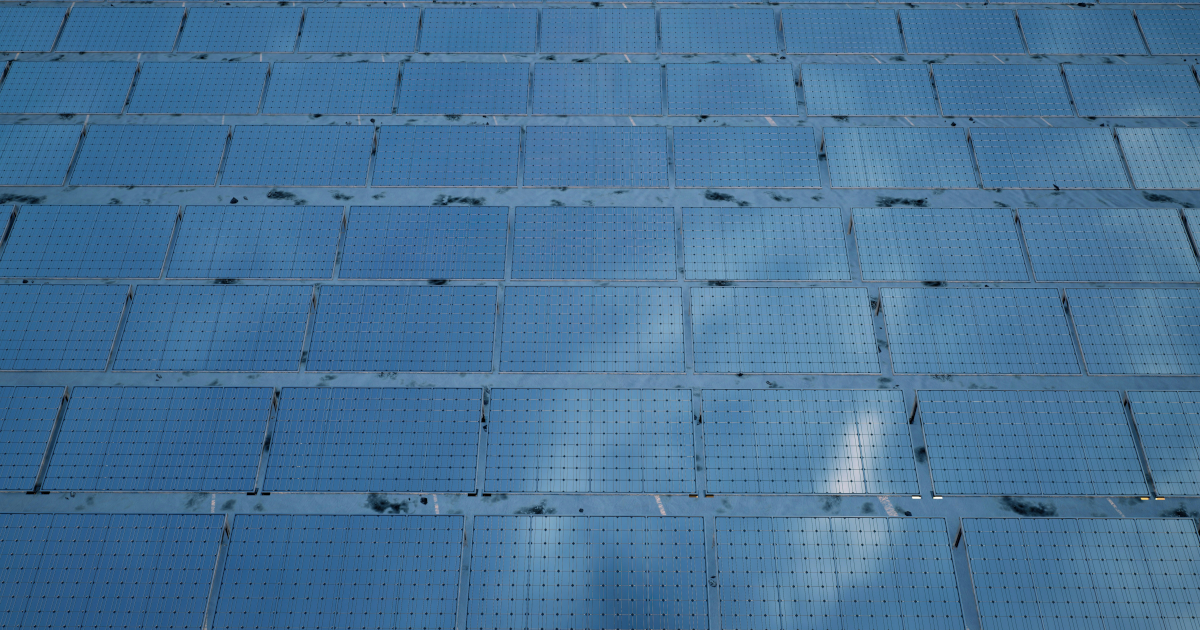
The rapid expansion of solar power across the United States is creating a land-use challenge with no simple answer. Solar requires far more land per unit of output than fossil fuel plants, making the question of where to site new capacity harder to avoid. That tension is showing up at scale as renewable buildout accelerates across the country. A coal plant can power a city from tens of acres; a solar farm generating equivalent output may need hundreds. How those questions are answered will shape who gains from the transition and who carries the environmental and social costs.
That is where firms like American Fusion Inc. (OTC: AMFN) could come in with alternative forms of clean energy in areas where competition for available land makes large-scale solar or wind impractical. The land-use dilemma underscores the complexity of transitioning to a fully renewable grid. While solar and wind are essential, their spatial footprint can lead to conflicts with agriculture, conservation, and community development.
According to industry analysis, utility-scale solar projects require about 5 to 10 acres per megawatt, whereas a natural gas plant might use only a fraction of that. As demand for clean energy grows, finding suitable sites becomes increasingly contentious. This is prompting a search for energy sources that offer a smaller land footprint, such as advanced nuclear, geothermal, or fusion technologies.
American Fusion Inc. is among the companies exploring compact fusion energy, which could potentially provide dense, continuous power without the land requirements of solar or wind. While fusion remains in development, its promise of abundant, low-impact energy makes it an attractive long-term solution to the land-use problem.
The land-use issue also highlights the need for thoughtful policy and community engagement. Siting decisions must balance energy needs with environmental justice, preserving natural habitats and respecting local land use. The article originally appeared on GreenEnergyStocks, a platform focused on companies shaping the green economy.
As renewable energy deployment accelerates, the land-use challenge will only intensify. Innovative approaches, including alternative technologies and better integration of solar with existing land uses like agrivoltaics, will be crucial. The transition to a clean energy future depends not just on generating enough power, but on doing so in a way that respects land and communities.