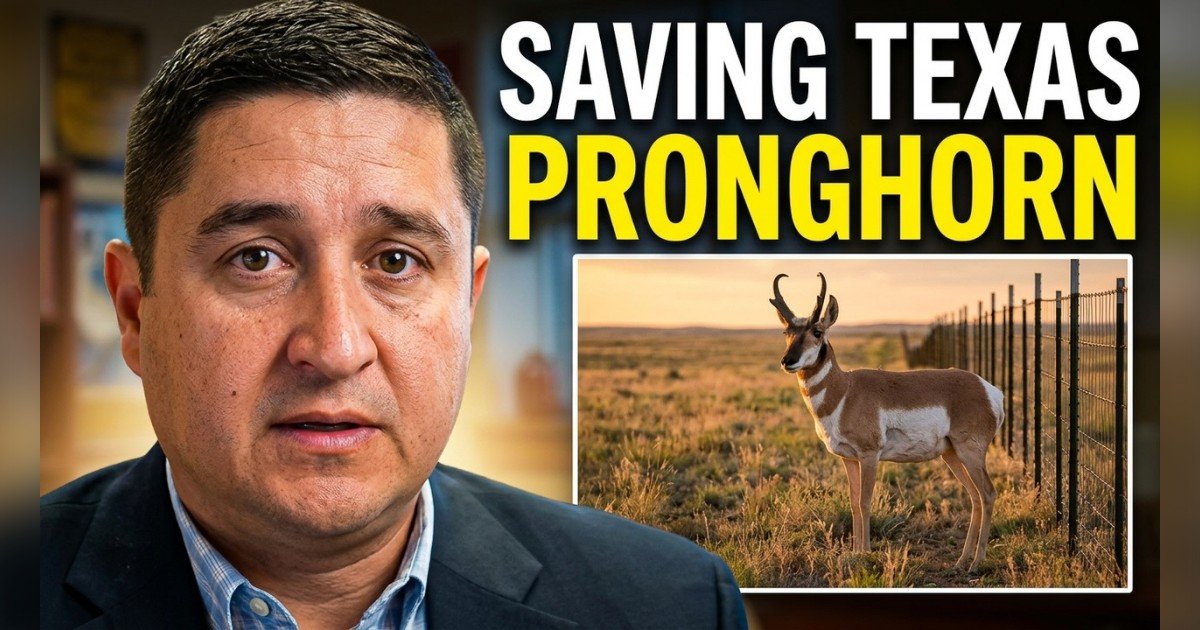
The recovery of pronghorn antelope in West Texas and the return of the flesh-eating New World screwworm are two sides of the same conservation coin, according to a leading scientist at Sul Ross State University. In a recent episode of the Building Texas Show, Lalo Gonzalez, chair of the Department of Natural Sciences and a leader at the Borderlands Research Institute (BRI), detailed how these intertwined stories reveal the vulnerability of the region's wildlife and the critical role of private landowners.
Gonzalez explained that pronghorn, which once thrived in the Marfa and Marathon grasslands, were nearly wiped out by a combination of drought, habitat loss, and fencing. Unlike whitetail deer, pronghorn are physically unable to jump fences, making even low barriers impassable. "They don't jump fences. They physically can't," Gonzalez said. "So any fence is a barrier, pretty much. It's a wall that they don't cross." A 2010-2011 translocation program that moved roughly 1,000 pronghorn from the Panhandle helped revive the population, but the species' long-term survival depends on landowners who remove or modify fencing. Gonzalez praised stewards like Nile Maxwell for lowering bottom wires to about 18 inches, allowing pronghorn to slip underneath while keeping livestock contained. In a state that is 95% privately owned, such cooperation is essential. "The best conservationists" are these private landowners, Gonzalez noted.
The podcast also addressed the resurgence of New World screwworm, a parasite that the U.S. eradicated from Texas decades ago using sterile-fly technology. Recent positive cases in Texas livestock and confirmed wildlife cases in northern Mexico signal a new threat. Gonzalez linked this to broader ecological pressures: pneumonia outbreaks in desert bighorn sheep, drought conditions comparable to Death Valley, and the loss of working landscapes from El Paso to Del Rio. These challenges are not isolated; they reflect a rapidly changing environment where wildlife and agriculture must coexist.
BRI's research portfolio, which includes work on scaled quail, black bears, mule deer, and soil health, is training the next generation of conservation scientists. Gonzalez highlighted that BRI's graduate program boasts a 95% job-placement rate, with millions of acres of West Texas serving as a living laboratory. The episode, hosted by Justin McKenzie, is part of The Building Texas Show's ongoing coverage of the people and projects shaping Texas. By focusing on these interconnected issues, the conversation underscores a fundamental truth: the future of West Texas wildlife hinges on collaborative, science-driven stewardship across private and public lands.