Pre-construction real estate sales have always required buyers to pay for something they cannot yet see, but that gap is widening as developers use photorealistic renderings and video to make unbuilt projects appear finished. Slower sales in many markets over the past year have left some projects short of the money needed to complete them, and the risk is sharpest for buyers purchasing far from home who often rely on marketing materials alone. "In today's world, a lot of developments use AI to create a beautiful picture," said Ed Eakin, a Texas broker and Certified International Property Specialist based in Cabo San Lucas. "It looks like the project is done and people are living there. In reality, no dirt has been moved."
Eakin's starting point is a set of direct questions for the developer: Has the project broken ground? How many units have closed? What are the expected completion dates for each phase? When will amenities be started and finished? The amenity question often separates marketing from reality, as some projects build their headline feature first while the rest follows slowly. Eakin points to a development near Spicewood, Texas, where the golf course has been finished for about a year but no homes have been built, streets and utilities are still going in, and the clubhouse is a temporary tent.
The most revealing question concerns money. Many developers cannot start construction until they reach a set level of pre-sales, so Eakin asks a version of the same thing each time: if no further units sell over the next year, can the project still be finished? Track record carries similar weight, as a developer with decades of operation and dozens of completed projects presents a different risk than a first-time builder.
The structure of the deposit schedule offers a less obvious clue. Some developers ask for around 30 percent at contract, another installment when the foundation is complete, and the balance at delivery. Others take an initial deposit and ask for nothing more until the end. In Eakin's view, the second structure usually points to a stronger developer, one able to fund construction without drawing on buyers' money along the way. At the other extreme, a developer asking for half the purchase price before breaking ground warrants extra caution.
How deposits are held matters as well. Eakin advises against wiring funds directly into a developer's own account; a local third-party escrow service can release money as construction milestones are met, such as the foundation poured, the walls up, and the roof on. Mortgage lenders active in Mexico typically vet a developer before agreeing to finance a unit in the project, offering another layer of scrutiny.
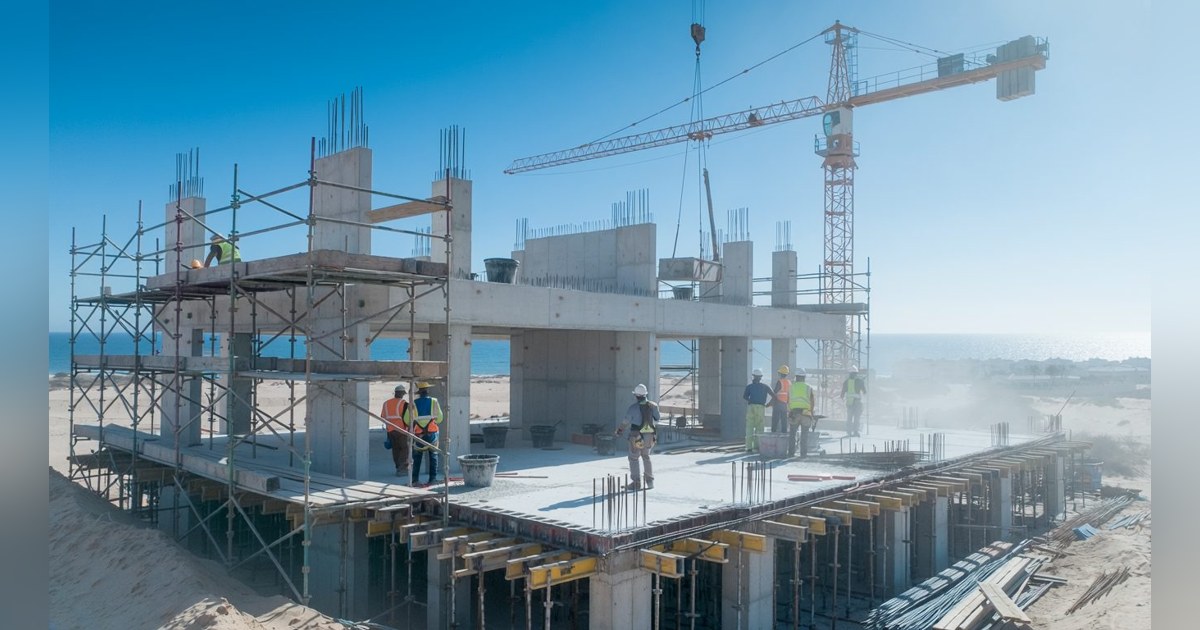
None of this replaces seeing the property. Workers, machinery, and noise suggest progress, while a fenced, locked site with no crew or ground where grass is growing over earlier work suggests a stalled project. "If nothing has changed in 30 days, let's figure out what's happening and why," Eakin said. For buyers who cannot visit often, that monitoring can be delegated through regular site checks with photos and video, or a live video walkthrough of a unit.
The consequences of skipping these steps tend to arrive late. Eakin says he still receives calls from buyers who sent deposits directly to a developer who later disappeared, often after finding an online group of other buyers in the same position. "At that point, it's really too late," he said. As pre-construction marketing becomes more polished and financing for new projects tightens, the distance between what a buyer sees online and what exists on the ground is likely to keep growing, making the payment schedule and independent site verification increasingly important signals of whether a project will be delivered.