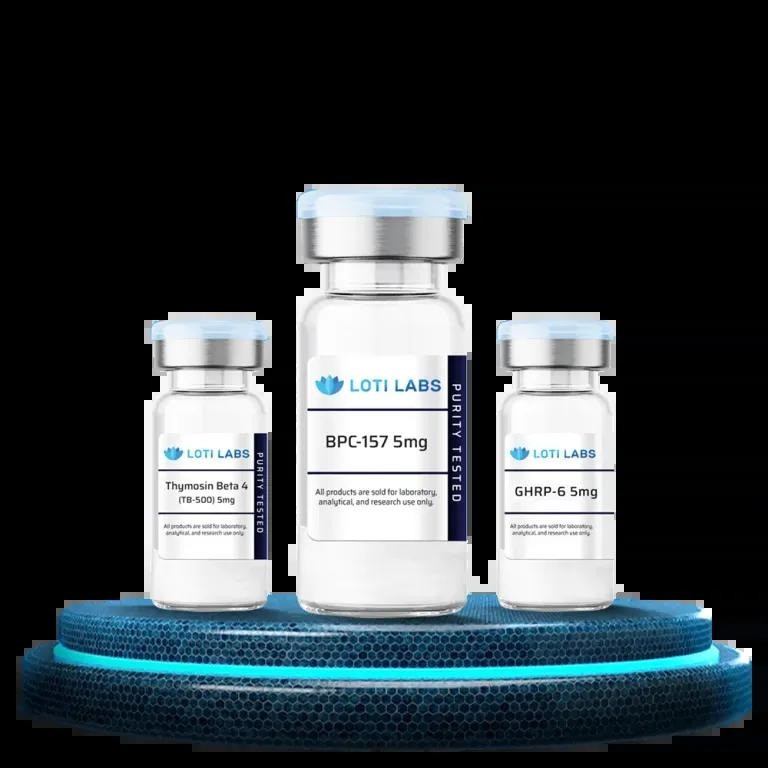
Peptides, short chains of amino acids, function as signaling or structural molecules in biochemical pathways. Their sequence, structure, and chemical properties influence receptor interactions, enzymatic modulation, and cellular responses, making them valuable tools in therapeutic design and metabolic research. The formation of peptides through peptide bonds creates a covalent backbone with free N-terminus and C-terminus, and the primary sequence determines molecular recognition and stability. Short peptides like dipeptides and tripeptides exhibit high solubility and rapid turnover, while longer oligomers can adopt secondary structures such as alpha helices or beta sheets. The distinction between peptides and proteins lies in size: peptides typically contain fewer than 50 residues and often act as signaling molecules, whereas proteins are longer and perform structural or catalytic roles. For example, insulin is a peptide hormone, while collagen is a structural protein.
Peptides operate through several mechanisms: binding to specific receptors to initiate intracellular signaling cascades, modulating enzymes via competitive or allosteric interactions, or disrupting microbial membranes in the case of antimicrobial peptides. Receptor binding relies on complementary surface interactions dictated by side chains, leading to G-protein or kinase pathway activation and second-messenger responses like cAMP or calcium flux. These signals can modify gene expression, enzyme activity, or cellular metabolism. Peptides also participate in paracrine and endocrine signaling, enzyme inhibition, and membrane interactions. Antimicrobial peptides, for instance, interact with lipid membranes to alter permeability and compromise microbial integrity.
Classification by length and function aids experimental design. Dipeptides and oligopeptides (3–20 residues) often serve as metabolic intermediates or rapid signaling molecules, while polypeptides (20–50 residues) can adopt protein-like domains. Notable peptide classes under research include collagen peptides, which affect extracellular matrix synthesis; BPC-157, investigated for angiogenic signaling and structural repair; GLP-1 receptor analogs influencing metabolic pathways; antimicrobial peptides targeting microbial membranes; and thymosin-like peptides regulating immune cell function. Each class varies in evidence levels, with some supported by preclinical models and others by controlled laboratory studies.
Delivery and stability remain challenges due to proteolytic degradation and cellular barriers. Formulation strategies such as acetylation, cyclization, or encapsulation in lipid-based systems can enhance stability and bioavailability. Experimental studies often assess modified peptides to improve receptor interactions and half-life. Rigorous validation of sequence, purity, and structural characteristics is essential for reproducible results. Understanding peptide mechanisms, classification, and formulation is crucial for advancing research in therapeutic design and biochemical modulation. Learn more about the science of peptides and explore the potential of Loti Labs Peptides and Loti Labs peptide capsules.