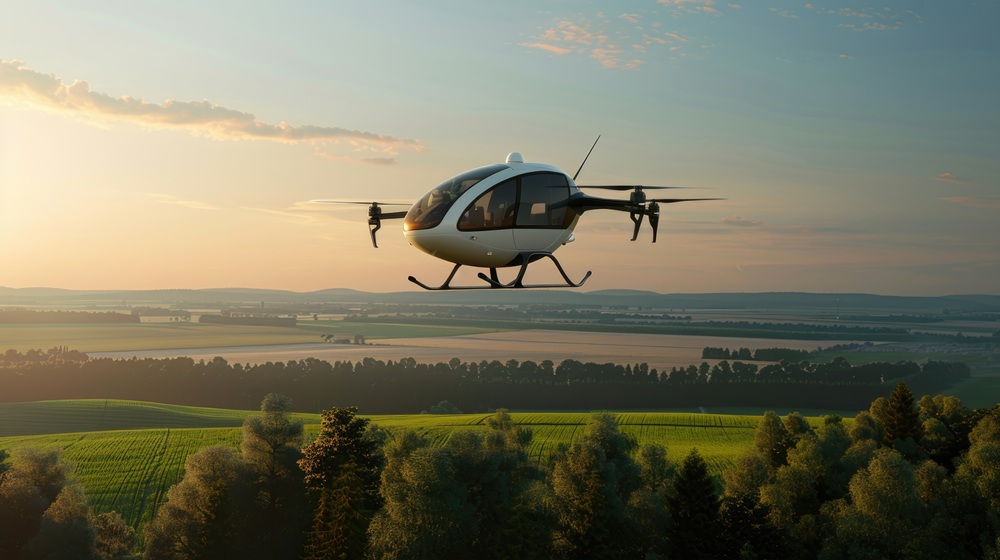
The recent Oshkosh AirVenture, which drew 700,000 attendees and featured the largest assembly of electric aircraft ever, revealed a critical insight: the electric aviation revolution is not primarily about flying cars or urban air taxis. Instead, it spans every aviation segment, from emergency services to agriculture, and includes the electrification of traditional aircraft.
Lisa Wright, founder of Landings, attended both the main EAA AirVenture and the Vertical Flight Society’s Electric Aircraft Symposium. Her observations challenge the dominant narrative. “What was interesting to me was there was great representation of electric vertical takeoff and landing aircraft, the ones we talk about,” Wright said. “But on top of that, a lot of the traditional aircraft are also converting to be electric. Cessna Caravans that land on water are being electrified. There were a lot of Pipistrels. Traditional aircraft that are being converted to electric as well.”
These conversions expand the immediate use case ecosystem. An electrified Beaver (eBeaver) can operate commercially now, as can Pipistrels with electric powertrains. These are not theoretical future aircraft awaiting certification; they are flying today.
The conventional industry story focuses on certification timelines for passenger eVTOLs like Joby and Archer. However, at Oshkosh, the electric aircraft market proved far more diverse. Israeli-based Air EV caught Wright’s attention with their production vision. “They’re focusing on producing not 300 aircraft a year, but like 30,000 aircraft a year,” she explained. “They’re really looking at it as basically wanting these sold like cars. The new Mosaic rule has opened up a lot of opportunity.”
This production scale represents a fundamental shift. Instead of boutique aircraft for wealthy early adopters, companies are positioning for automotive-scale manufacturing. That only makes sense if the market is broader than flying cars for commuters. Skyfly is another example, pursuing Mosaic-level approvals for light sport and non-commercial aircraft, freeing them from many traditional restrictions.
One of the most telling moments occurred during Tim Jackson’s presentation on electric aircraft futures. As Jackson spoke, a Beta aircraft took off outside. Wright interrupted, and the audience rushed to watch the conventional-wing Beta fly. “It was a really magical moment for people to be listening to someone tell them about these aircraft, and the talk get interrupted by the aircraft actually flying,” Wright said. “Beta was saying that particular aircraft has flown 60,000 miles, and their fleet that they’re testing right now has flown 175,000 miles.”
These are not prototypes accumulating test hours in controlled environments; they are accumulating operational miles for real-world deployment, informing certification pathways and operational readiness.
Walking through the vast array of aircraft, Wright observed that aviation has always thrived on diversity. “When you see 20,000 planes in front of you, and they’re all totally different – some 70 years old, some 10 years old – you realize that innovation has always meant every plane is so totally different,” she noted. “There’s a lot of weird looking stuff, but aviation has been figuring out how to keep redesigning things as long as they fly.”
The implication for electric aviation is profound. There is no single right way to build an eVTOL, no one correct charging standard, and no optimal aircraft design. The industry is in a phase of experimentation, which is not a problem but how aviation innovation works.
For commercial real estate owners, communities, and infrastructure developers, Oshkosh signaled that the electric aviation market is expanding faster and broader than projections. It is not waiting for Joby or Archer. Conversions of existing platforms are already operational. Manufacturing at automotive scale is being planned. Use cases across emergency services, agriculture, and logistics are being validated in real time.
The infrastructure opportunity is not limited to passenger vertiports in cities. It extends across rural networks supporting traditional aircraft conversions, emergency response, agriculture, and logistics. The market for electric aviation infrastructure is arriving now, across multiple aircraft categories simultaneously.