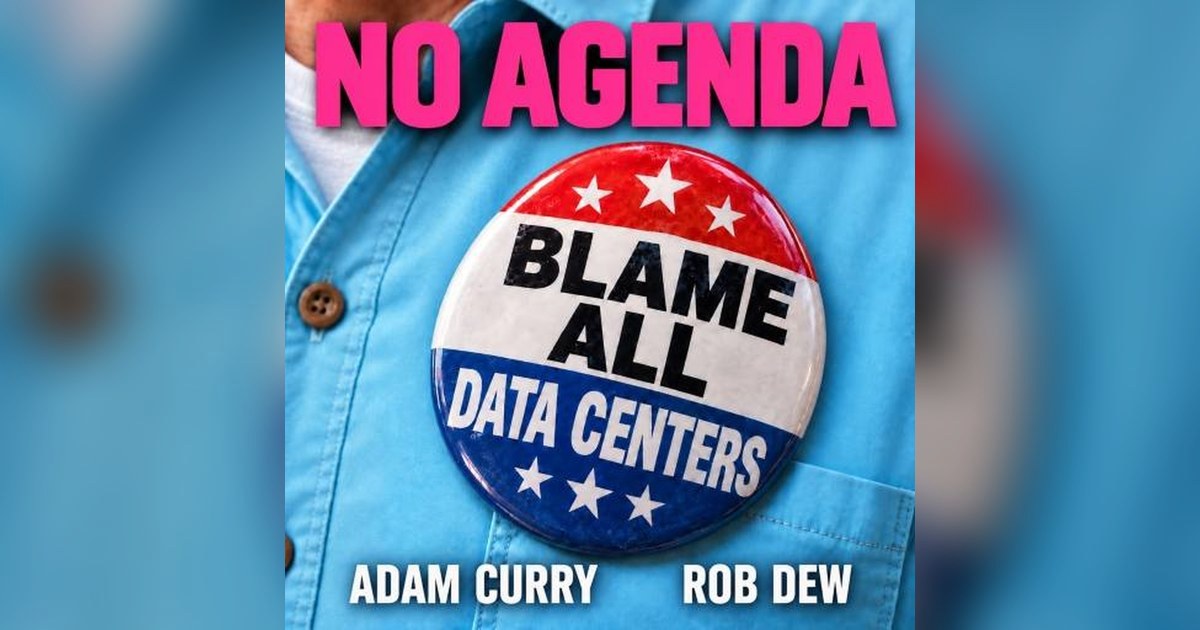
In an era of rapid news cycles and competing narratives, independent media analysis offers a critical counterpoint to mainstream reporting. Episode 1909 of the No Agenda Show, titled "Immune Amnesia," published October 4, 2026, exemplifies this by deconstructing a series of high-profile stories. Host Adam Curry, broadcasting from the Texas Hill Country with guest co-host Rob Dew, guides listeners through a multi-hour examination of events that span technology, public health, and social upheaval. The episode's importance lies in its challenge to conventional narratives, urging scrutiny of how stories are framed and which details are emphasized or omitted.
The show opens with the mysterious FlyDubai Boeing 737 MAX 8 incident, where Curry and Dew question the official account of a 20,000-foot dive. By incorporating pilot simulator analysis from CNN's Erin Burnett, they highlight inconsistencies that raise doubts about aviation safety reporting. This segment underscores the broader issue of trust in institutional narratives, particularly when technical details are complex and public understanding relies on media interpretation.
Technology dominates much of the discussion, with the hosts exploring the accelerating displacement of commercial software by AI agents. Dew shares his experiment building a donation-spreadsheet tool that replaced Microsoft Excel, demonstrating AI's practical potential. Curry introduces his new podcastindexrobot.com MCP server, built on the open Podcast Index he co-owns with Dave Jones, which uses an agent to strip dynamically inserted ads from Ed Zitron's Better Offline podcast. This innovation not only showcases AI's capability to modify media consumption but also raises questions about advertising models and content control. The segment pivots to a 1999 David Bowie interview predicting the internet as an "alien life form," framing current AI developments as part of a longer trajectory of technological disruption.
Public health also features prominently, with NPR's measles coverage and immunologist Michael Mina discussing "immune amnesia." This concept, where measles erases immune memory, explains why outbreaks can have long-term consequences beyond immediate illness. The hosts connect this to a measles resurgence in Pennsylvania, emphasizing the importance of vaccination and the risks of declining herd immunity. By presenting this scientific perspective, the episode informs listeners about a critical health issue often overshadowed by political debates.
Social unrest is another key theme, with GB News and France 24 reporting on burning schools and barricades in Paris suburbs. Curry and Dew analyze the framing of "outsiders" and the underlying tensions, suggesting that media coverage may oversimplify complex socioeconomic factors. This analysis encourages listeners to consider root causes rather than accepting surface-level explanations.
Additionally, the episode touches on Meta's new Muse AI agent, Mark Zuckerberg's Charm device, and Airbnb CEO Brian Chesky's comments on Silicon Valley's disconnection from the public. These stories illustrate the growing gap between tech elites and ordinary users, a recurring concern in No Agenda's commentary. The hosts also revisit historical events like US Air Flight 427's 1994 rudder hardover and Camille Paglia's views on coeducation, providing context for current debates.
By weaving together these diverse threads, No Agenda Episode 1909 serves as a reminder of the value of independent media in an age of information overload. It challenges listeners to question official narratives, examine multiple perspectives, and recognize the interconnectedness of technology, health, and society. In doing so, it reinforces the importance of critical thinking and the role of alternative voices in shaping public discourse.