As organizations race to integrate artificial intelligence, a new challenge has emerged: the technology is ready, but people are not. Global studies show that while executives see AI as essential to future growth, the majority of employees lack the skills and confidence to use it effectively. According to PwC, companies leveraging AI are achieving up to three times higher revenue-per-employee growth than lagging peers. Yet the workforce is not keeping up.
68% of executives report a moderate to extreme AI skills gap in their organizations, according to Deloitte (2025). Only one-third of organizations say employees are adequately trained for AI-related roles, even though 94% of CEOs rank AI skills as their top hiring priority, per IDC (2025). Just 22% of employees know how to use prompt engineering effectively, highlighting a major adoption barrier, according to Forrester (2025). Across studies, between 60% and 70% of companies entering 2026 lack formal AI training programs, despite record spending on automation and generative tools. The economic impact of the AI skills gap now exceeds $5 trillion globally, according to IDC.
“AI doesn’t replace human expertise — it expands capacity,” said Julie Anne Eason, Founder of MindFlare AI. “The problem isn’t access to technology; it’s access to practical, role-specific learning. Closing that skills gap is the fastest way to unlock real ROI.”
The problem is compounded by what psychologists call the Ebbinghaus Forgetting Curve — the well-documented finding that people forget up to 90% of what they learn within a few days if it is not reinforced or applied. That is why one-time, or even once-a-week, AI training sessions fail to create lasting capability. Employees need daily immersion within their ongoing tasks, experimenting and refining how they use AI to get their work done faster, smarter, and more creatively.
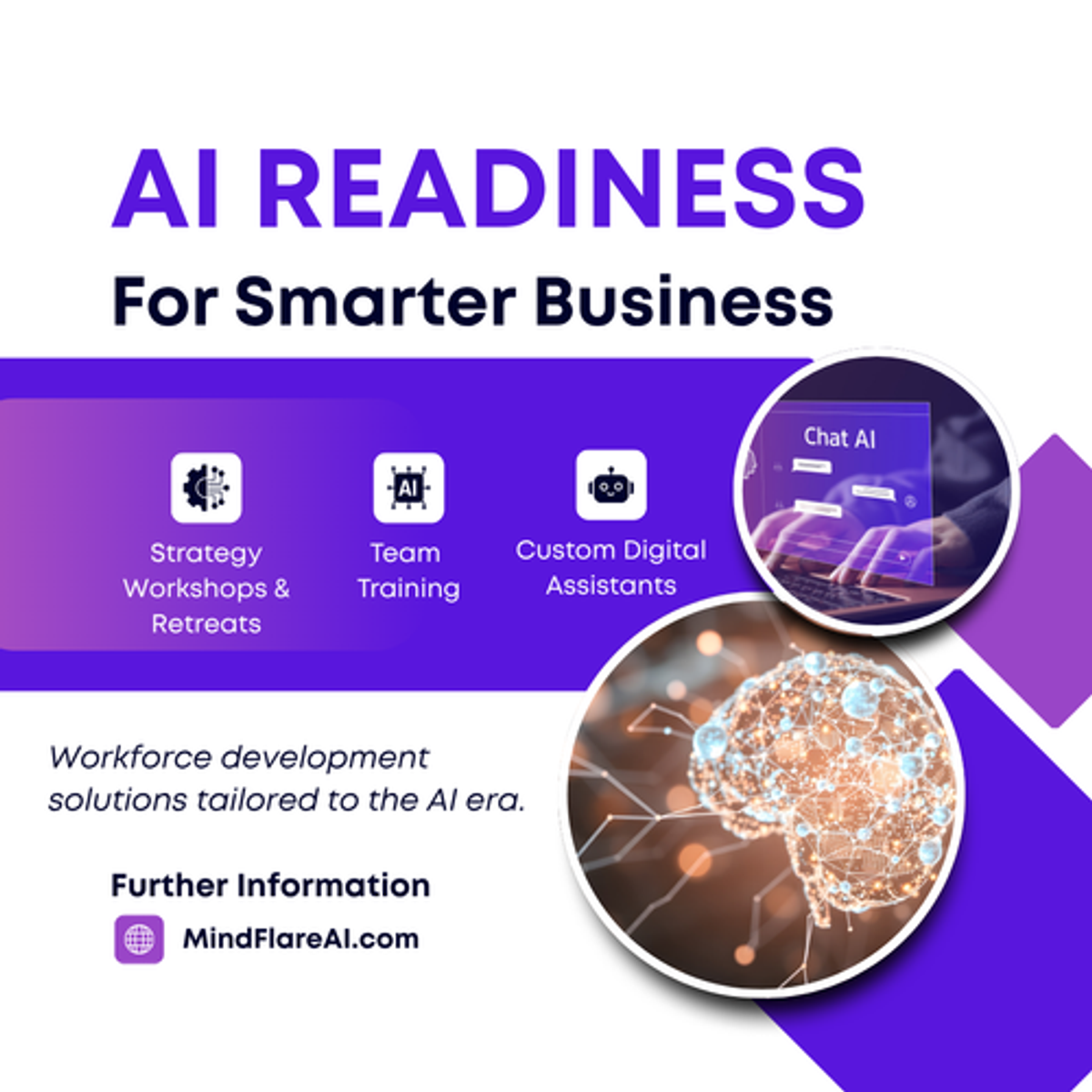
MindFlare AI’s workshops combine global AI literacy standards with role-specific application, hands-on workflow design, and real-time AI learning assistants. Training becomes integrated, practical, and continuous. This approach transforms AI education from theory into daily applied skill-building that fits seamlessly into existing workflows. The result: higher adoption, faster productivity gains, and measurable business value.
“When people understand exactly how AI applies to their role, adoption stops being intimidating and starts being exciting,” Eason added. “That’s when companies move from experimenting to scaling.”
AI training remains the single largest barrier between adoption and measurable ROI, according to Deloitte. Most employees are unprepared for AI-enabled workflows, per Forrester. The cost of inaction already exceeds $5 trillion worldwide, according to IDC. Many organizations are using their remaining 2025 training budgets to accelerate AI adoption and build readiness before the new year. The companies that invest in AI capability now will enter 2026 ahead of the curve — with trained teams, measurable ROI, and a clear competitive advantage.
MindFlare AI’s workshops close the skills gap, helping organizations build confident, capable teams ready for the next era of work.