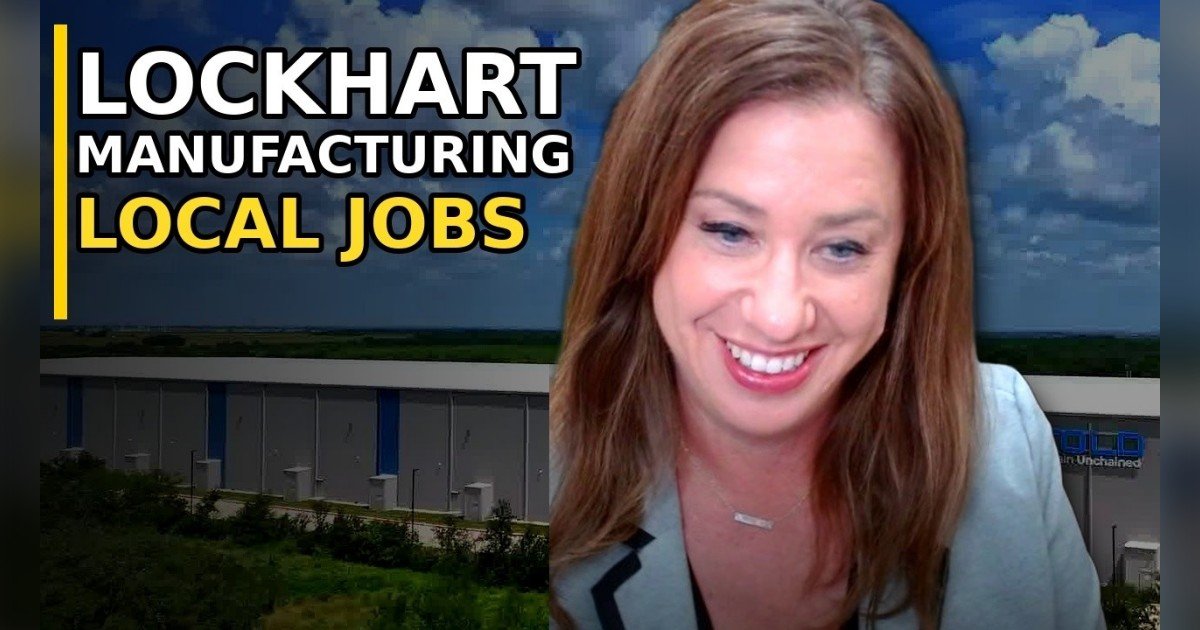
Lockhart, Texas, is quietly building a reputation as a food manufacturing hub, and the strategy behind it offers lessons for communities seeking to grow their industrial base. In an episode of Is This Texas Town Quietly Winning the Manufacturing Race?, host Justin McKenzie speaks with Holly Malish, Director of Economic Development for the Lockhart Economic Development Corporation, about the projects and partnerships fueling the town's momentum.
Malish, who took the role in 2024, highlights major projects like Ziegenfelder and RealCold, both announced before her arrival and now in the phase of job creation. Hill Country Foodworks expanded into a new building and later secured a second incentive to purchase an onion slicing machine. Mill Scale, a local metalworking business, is another recent win. These local expansions are crucial, Malish says, because they demonstrate to prospective companies that Lockhart supports existing businesses. "Most of my most recent wins are really coming from local. They're expanding," she notes.
The town's certifications as a Film Friendly Texas community and a Music Friendly Texas certified community further enhance its appeal. Malish explains that the Film Friendly designation signals to productions that Lockhart is willing to assist and make shoots easier. This has led to catering opportunities for local restaurants, adding another layer to the economic ecosystem.
Regional cooperation is a cornerstone of Lockhart's approach. Malish describes a shift from siloed thinking to a shared regional view, where a win for a neighboring community still benefits Lockhart through workforce and educational programs. "A win for the region is really a win for me and the city," she says. Communities refer prospects based on strengths, and they collaborate on job fairs. Since Lockhart has limited empty buildings but ample land, it can partner with other cities to accommodate projects.
Workforce development is another key focus. McKenzie praises teachers and career and technical education programs that expose students to manufacturing careers. Malish highlights a Tesla manufacturing development program through the Boys & Girls Club, which provides social skills training, removes barriers like transportation and clothing, and offers paid training at Austin Community College, leading to interviews with Tesla. This initiative not only prepares workers but also strengthens the pipeline for local manufacturers.
The implications of Lockhart's strategy extend beyond its borders. By prioritizing local expansions, regional collaboration, and workforce readiness, the town is creating a sustainable model for industrial growth. As Malish's experience shows—from an aircraft parts manufacturer to chambers of commerce—economic development is about sales and marketing, and Lockhart is effectively selling its strengths. The full conversation is available on The Building Texas Show.