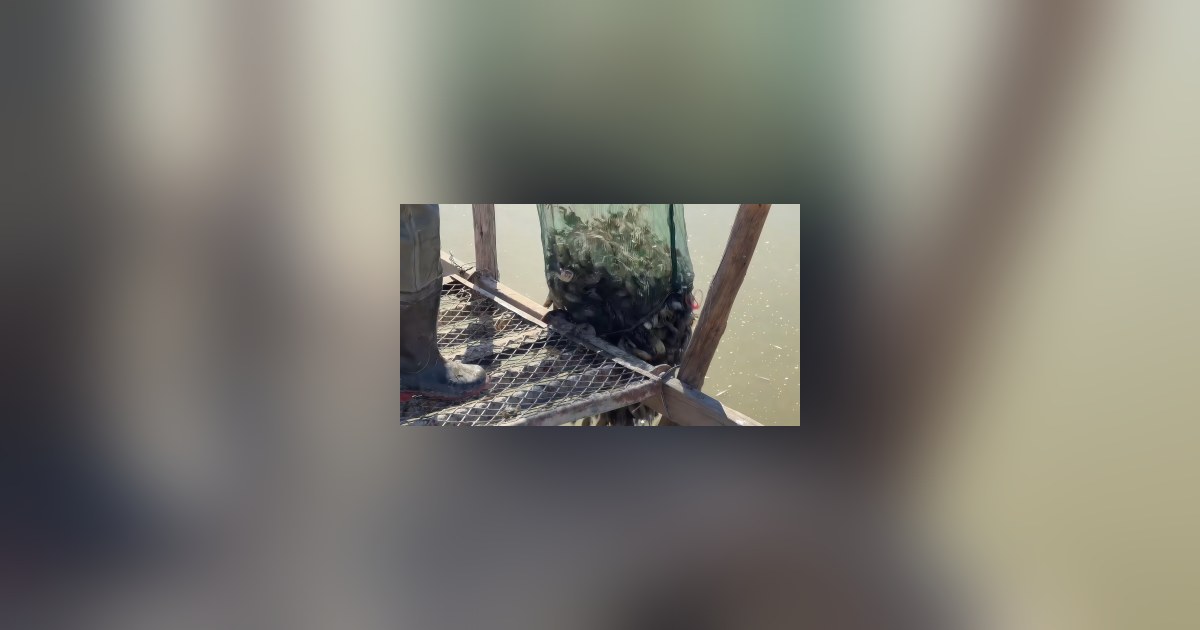
The Yellow River Rice-Fish Eco-Tourism Park in Juungar Banner, Ordos, Inner Mongolia, has moved more than 20,000 jin, or roughly 10 metric tons, of seed crabs from rearing ponds into dedicated overwintering ponds, according to a press release distributed via Media OutReach Newswire. The move is not routine farm logistics. It creates a reserve of young crabs that next year's rice-field polyculture will draw from, reducing dependence on purchased stock and giving the operation a more predictable supply of animals for its fields. The announcement matters because it shows a saline-alkali region converting ecological constraints into a working agricultural system, and it offers a concrete example of how degraded land can support both food production and higher rural incomes.
Juungar Banner lies in the heart of the Yellow River's "Ji-shaped bend." The river runs 238 kilometers through the banner, representing 28 percent of its course in Inner Mongolia. As a major source area of coarse sediment for the Yellow River, the banner long suffered severe soil erosion, with eroded land at one point covering more than 70 percent of its total area. Around Xiaotanzi Village in Dalu Town, geology has left some 80 percent of the land chronically saline-alkali. Traditional corn fields there yielded less than 300 jin per mu, or roughly 2.25 metric tons per hectare, and residents described the land as a stretch of white where nine crops in ten failed. A fragile ecology and poor livelihoods were the twin shackles on this stretch of riverbank.
In 2018, Dalu Town introduced a combined approach of saline-alkali land improvement and integrated rice-fish farming. Ditches were dug to flush salts from the soil, organic fertilizer was worked into the soil, and salt-tolerant rice was planted on a trial basis. In 2022, the park began large-scale operations with an integrated polyculture of rice, crab and fish. The rice shaded the aquatic animals, and their waste fertilized the fields, yielding what the park describes as three harvests from a single field. This May the park brought in 200 jin of megalopae, the post-larval stage, from Panjin, Liaoning, and released them into the rice paddies to grow out. After a full growing cycle under close, hands-on management, the park produced more than 20,000 jin of quality seed crabs.
It is the third year the park has raised its own seed crabs, and the integrated system has come together from megalopa rearing and field management to overwintering and stock retention. Qiao Sheng, who heads agricultural production at the park, said buying in megalopae to raise the seed crabs lowers the cost of stock, gives the park a much better handle on quality, and has improved survival rates. Of this year's 20,000-plus jin of seed crabs, 10,000 jin is earmarked for the park's own rice fields and the rest will be sold, bringing returns from both in-house grow-out and external sales. Overwintering care is critical to the survival of seed crabs, and survival rates have held steady over the past two winters. Those that come through will go back into the paddies next May to be grown to adult size and reach the market in autumn.
The implications extend beyond one park. From bare saline-alkali waste to three harvests from one field, Xiaotanzi's turnaround is one facet of Juungar Banner's broader shift from ecological governance to industrial transformation. In 2025, the village's collective income surpassed 500,000 yuan, and per-capita income reached 30,000 yuan. The seed crab reserve is therefore both an agricultural input and a sign that the region's recovery model is maturing, with local breeding, overwintering and stock retention now integrated into a system that can be planned year to year.