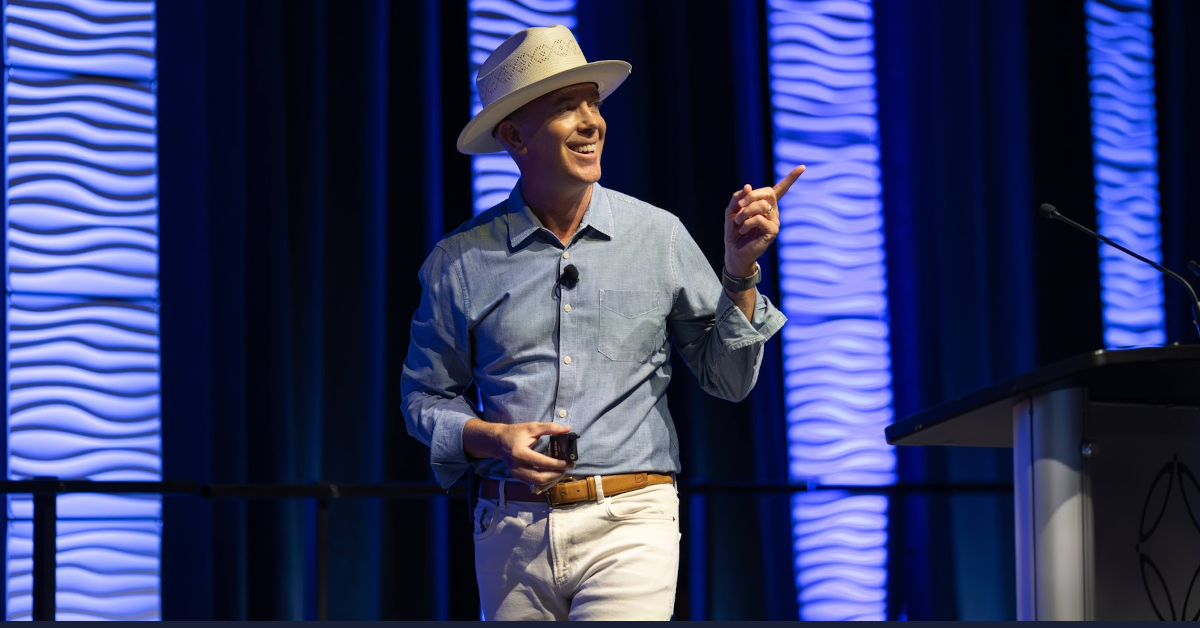
In a wide-ranging interview on the Building Texas Show with host Justin McKenzie, aerospace entrepreneur and military veteran Joseph Kopser outlined a bold vision for the state’s workforce, specifically highlighting the booming space industry, rural economic revitalization, and the critical need to bridge the gap between education and industry. Recorded at Dallas College during the recent Y Texas summit, the conversation underscored Kopser’s role as a catalyst for economic growth through his work with the Grayline Group and the newly formed Space Workforce Incubator for Texas (SWIFT).
Kopser, a West Point graduate and aerospace engineer, emphasized that while Texas is becoming a global hub for space exploration—hosting giants like SpaceX, Blue Origin, and Firefly Aerospace—the state faces a critical shortage of skilled labor required to sustain this growth. “We have to have a workforce to build those rockets, to sustain life support systems, and to build spacecraft,” Kopser told McKenzie. “It’s not just about rocket science design; it’s about physically running pipes, tubes, and chambers that hold highly pressurized liquid oxygen. That takes plumbers, electricians, and welders with great skill.” To address this, Kopser co-founded SWIFT to connect 18-to-35-year-olds with vocational training and higher education, ensuring that the "Texas economic miracle" isn't stalled by a lack of skilled hands. “People will be what they can see,” Kopser noted, stressing the importance of exposing students to these career paths early.
The discussion also tackled the "exporting of talent" from rural Texas. Kopser argued that the combination of fiber internet expansion and emerging autonomous supply chains offers a historic opportunity to reverse the exodus of young people from small towns. “We experimented for 20 years with exporting everything, and we recognized the fragility of our supply chain,” said Kopser. “Now, with the reshoring of manufacturing and the ability to work remotely, you can live the quality of life you want in rural Texas while accessing the modern economy. We cannot hollow out the middle class in our small towns; we need high-paying jobs to remain alongside the service industry and retirees.” Kopser highlighted "dual-use" technologies—innovations serving both national defense and commercial sectors—as key economic drivers. He pointed to Texas-based companies like Apptronik (humanoid robotics), Saronic (autonomous watercraft), and LoCal (biochar energy) as examples of private innovation solving public problems.
Joseph Kopser recently launched his campaign to represent Texas House District 47. “The skills gap is widening, and the decisions we make today will shape Texas’ economy for decades,” Kopser stated. “The hyper-partisan politics consuming our country distract from the real work of creating jobs and giving kids a fair shot.” For those interested in providing feedback on his potential candidacy, Kopser has launched a data-driven survey to gauge constituent priorities. He continues to advocate for "people over politics" through his organization, USTomorrow.