Huawei's launch of the HUAWEI Mate 90 Series, announced via Media OutReach Newswire, represents more than a routine product refresh. It signals Huawei's determination to control its entire technology stack—from chip design to operating system to cloud services—and to translate that control into tangible consumer benefits. The announcement matters because it demonstrates how the company is navigating sustained external pressures by doubling down on self-reliance, potentially altering the competitive dynamics of the global smartphone industry.
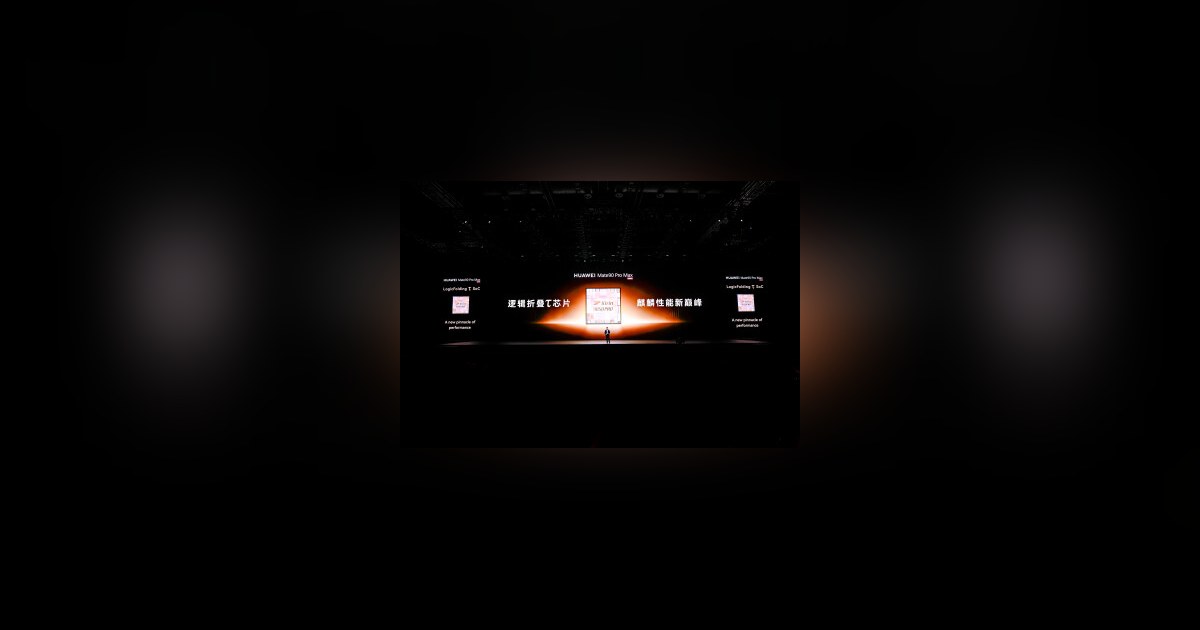
Between 2007 and the end of 2025, Huawei invested CNY1.8 trillion in research and development. That staggering figure is the foundation for the Mate 90 Series, which features the LogicFolding Tau Chip, Kirin 9050 Pro, across the entire lineup. The chip's innovative architecture compresses critical path latency to enable 5 million signal transmission bonds and 125 TB/s inter-die bandwidth, while the Kirin 9050 Pro delivers a 31% overall performance increase. These gains are not merely incremental; they reflect a long-term strategy to build core technology that reduces reliance on external suppliers. For consumers, this means faster, more efficient devices; for competitors, it raises the bar on what a flagship smartphone can achieve.
The implications extend to the operating system ecosystem. HarmonyOS 6 and HarmonyOS 7 now power over 90 million devices, with expectations to surpass 100 million by year-end. A growing installed base attracts developers—already over 11 million globally—creating a virtuous cycle that strengthens Huawei's platform independence. The Mate 90 Series leverages this with HarmonyOS AI features like Celia Memories and the 30B MoE on-device foundation model, offering proactive, context-aware experiences that rival cloud-dependent assistants. This on-device AI approach could set a new standard for privacy and responsiveness.
Imaging remains a key battleground, and Huawei's XMAGE True-to-Color Camera 3.0, with full-focal-length infrared optical coating, improves color accuracy by 37% and skin-tone accuracy by 62%. The Pro Max's 18 EV ultra-HDR main camera and 200 MP RYYB telephoto camera push mobile photography further into professional territory. The HUAWEI XMAGE Z10 Modular Camera, with its 1-inch sensor and 24–240 mm continuous optical zoom, offers studio-quality imagery across focal lengths, appealing to content creators and professionals. Such advancements could pressure rivals to accelerate their own camera innovations.
Durability and connectivity also see significant upgrades. The full-body Kunlun Xuanwu architecture, featuring Optical Kunlun Glass with 20x better drop resistance, and IP68/IP69 ratings, address real-world resilience. The industry-first Wi-Fi and cellular converged antenna architecture boosts signal gain by 2 dB, and eSIM support with four-SIM, three-standby functionality on the Pro Max enhances flexibility for frequent travelers and multi-device users. These improvements matter because they solve everyday pain points, making the device more reliable in diverse environments.
Pricing starts at CNY5,999 for the standard model and reaches CNY12,999 for the RS ULTIMATE DESIGN, positioning the series firmly in the premium segment. While the launch is initially for the Chinese market, the technological achievements could influence Huawei's global standing, even amid ongoing challenges. The Mate 90 Series thus serves as a proof point: Huawei's massive R&D bet is yielding products that compete at the highest level, and its vertical integration may inspire other manufacturers to pursue deeper control over their supply chains. Ultimately, this launch is a statement of resilience and ambition, with implications for industry innovation and consumer choice.