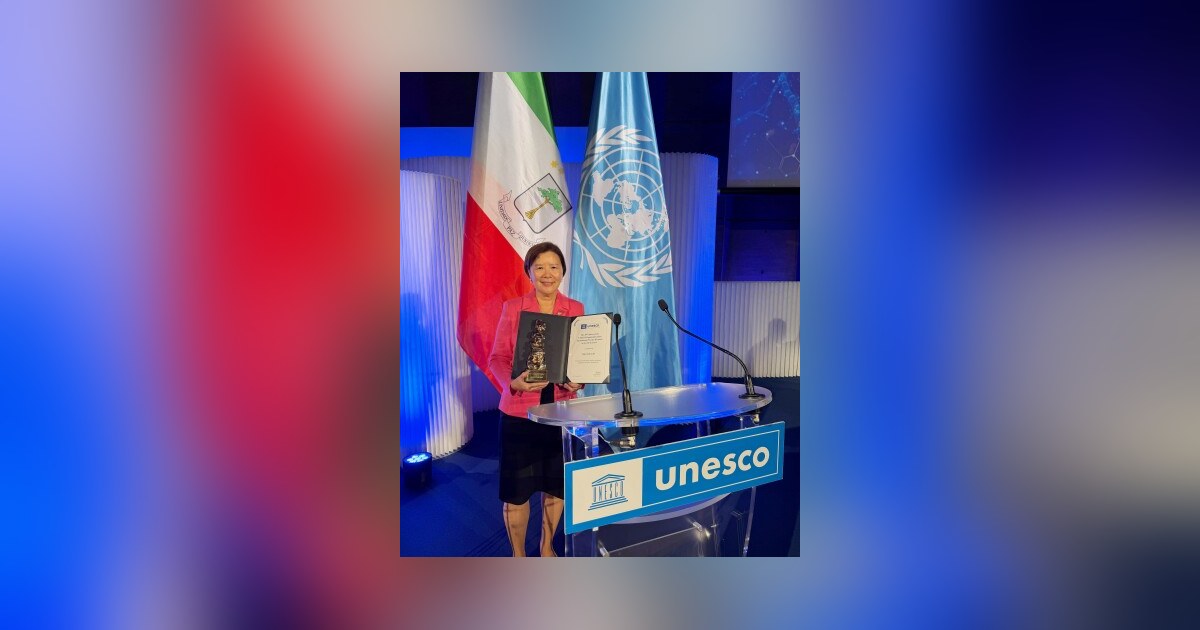
Prof. Nancy Ip, President and The Morningside Professor of Life Science at The Hong Kong University of Science and Technology (HKUST), has been awarded the 2026 UNESCO-Equatorial Guinea International Prize for Research in the Life Sciences. The award, announced by UNESCO, recognizes her pioneering contributions to neuroscience and Alzheimer's disease research. The ceremony took place on November 6 at UNESCO Headquarters in Paris, France.
UNESCO cited Prof. Ip as an internationally renowned neuroscientist whose work has significantly advanced the understanding of brain function and neurodegenerative diseases. Her team's discoveries include novel biomarkers and genetic risk factors for Alzheimer's, an innovative blood-based diagnostic technology for earlier detection, and advances in gene therapy that open new avenues for prevention and treatment. The recognition matters because Alzheimer's disease affects millions worldwide, and early detection remains a major clinical challenge. Prof. Ip's blood-based test, co-developed with her team, offers a minimally invasive and efficient way to identify individuals with mild cognitive impairment, supporting timely intervention and clinical trial enrollment. The technology has already been adopted by multiple healthcare institutions in Hong Kong and expanded into community settings, demonstrating tangible impact on patient care.
In receiving the award, Prof. Ip expressed gratitude to her team, collaborators, and colleagues, and thanked HKUST for its support. "I am deeply honored to receive the UNESCO-Equatorial Guinea International Prize for Research in the Life Sciences," she said. "This recognition belongs not only to me, but also to the many talented and dedicated team members, collaborators and colleagues who have contributed to these achievements." She also emphasized the human dimension of the disease: "Alzheimer's disease is not just a scientific and medical challenge. It is also a deeply human one, profoundly affecting the lives of those living with the disease and their families."
Prof. Ip has devoted more than three decades to neurodegenerative disease research, publishing over 350 scholarly papers and holding 144 patents. Her team established a large-scale Chinese Alzheimer's disease biobank to address the underrepresentation of Asian populations in research, identifying genetic risk factors prevalent among Chinese individuals. This work lays the foundation for precision diagnostics and therapeutics. The team is also exploring gene-editing approaches for familial Alzheimer's disease, aiming to build an integrated pipeline from early diagnosis to next-generation therapeutics. Such efforts underscore the importance of global scientific collaboration, which Prof. Ip highlighted: "Science is a collective endeavor. Every breakthrough is built on collaboration across disciplines, institutions and borders."
The UNESCO-Equatorial Guinea International Prize was established to recognize outstanding scientific achievements that advance human health and improve quality of life, promoting scientific excellence and international collaboration. This year's prize is shared by three laureates, who jointly receive US$300,000 and an Integración Tribal statuette. Prof. Ip's recognition not only honors her individual achievements but also elevates the profile of Alzheimer's research in Asia and reinforces the role of institutions like HKUST in addressing global health challenges. As she noted, empowering young researchers with freedom and support is essential to tackling the grand challenges facing humanity.