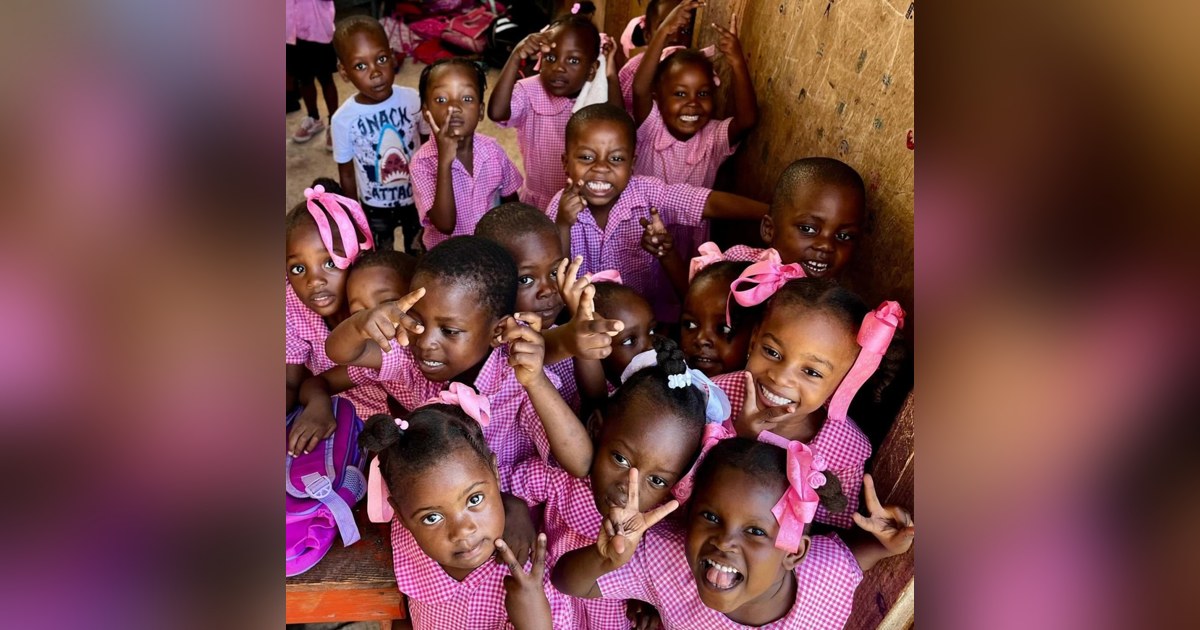
Haiti Empowered, a nonprofit providing education, meals, and healthcare to more than 2,500 children in Haiti, has launched a cross-country road tour called The Empowered Road to address a $150,000 budget gap. The organization is currently feeding children on credit as rising costs for food, fuel, medical supplies, transportation, and Haitian staff wages outpace available funding. The tour aims to introduce the mission to a new generation of supporters after COVID-19 halted mission trips, which had historically been the primary way people encountered the organization and became long-term partners.
The stakes are stark. More than half of Haiti's population faces acute hunger, with over 1.8 million people in the emergency phase. An estimated 253,725 young children are expected to suffer from acute malnutrition over the coming year, and one in seven Haitian children is already out of school, with nearly a million more at risk of dropping out. For the children who attend Haiti Empowered schools, the classroom is often the only place they receive a meal, an education, and access to healthcare. Losing even one school would send 2,500 children home to communities where home often has nothing to offer.
This is not the first time Haiti Empowered has faced a budget crisis. Last year, the organization fell behind budget and faced the prospect of closing a school. Kay Larson, the organization's president, contacted Creative Studio Productions, an Eagan-based creative agency, to build a campaign called Adopt a Box. CSP custom coded a campaign page and connected it to Haiti Empowered's existing CRM, allowing supporters to give at any level from $25 to $1,000. In thirty days, the campaign raised $42,000, surpassing its $40,000 goal on top of regular giving. The budget was caught up, and the school remained open.
That success, however, has been overshadowed by a larger gap this year. The root cause is the collapse of mission trips during COVID-19. For years, trips were how most people encountered Haiti Empowered, met the children and Haitian team, and returned home as sponsors, advocates, and storytellers. When trips stopped, that pipeline largely disappeared. At one point, child sponsorship made up about 75 percent of the organization's income; today, it is closer to 47 percent. Fewer new people are meeting the mission, and every meal costs more to serve.
The Empowered Road is Larson's response. If people cannot come to Haiti, she is bringing Haiti's story to them. The cross-country journey aims to share the mission in person and introduce a new generation of supporters to the children who are counting on them. The tour runs on introductions: connecting Haiti Empowered with churches, businesses, foundations, and community groups. More information about the road tour and how to refer a potential partner is available through the organization's website at haitiempowered.org.
For Larson, the work is personal and urgent. She has said that the organization might not exist without its creative partners, and that the children are the reason the mission continues. The road tour represents a critical effort to rebuild the supporter pipeline that COVID-19 disrupted, ensuring that the schools remain open and that 2,500 children continue to receive the meals, education, and care that they depend on. One introduction, Larson believes, can become a relationship, and one relationship can help sustain this work for years to come.