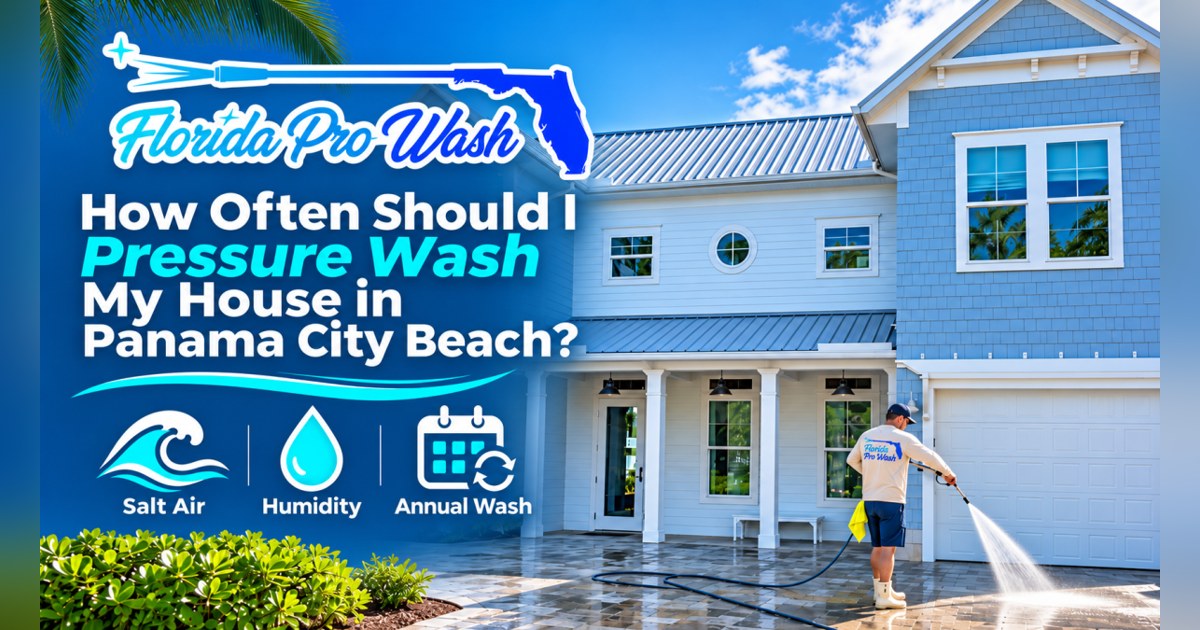
Florida Pro Wash has published a guide that challenges the common once-a-year pressure washing advice for Panama City Beach homeowners. The company argues that national recommendations are built for climates with real winters, not a humid beach town where algae can grow almost year-round. The guide, available on how often to pressure wash a house in Panama City Beach, breaks the answer down by location, siding, and season, offering a more localized approach to exterior maintenance.
The stakes are higher than mere curb appeal. Long-term WeatherSpark averages show the muggy season running from mid-April to late October, with about 18 wet days in July alone, and temperatures stay above freezing roughly 11 months a year. Salt air leaves a film on Gulf-front siding, and shaded walls under long-leaf pines stay damp long after storms pass. Many of those homes have no one living in them full time; the city's growth plan housing data counted about 16,000 second homes and rental units out of roughly 19,580 housing units. For owners who live elsewhere, a generic annual wash leaves months for buildup to go unnoticed, potentially leading to costly repairs.
Siding makers set their own expectations, too. James Hardie's fiber cement maintenance guidance calls for a wash every six to 12 months and cautions against high pressure, reinforcing the guide's emphasis on method as well as frequency. The new guide sets the schedule by exposure rather than a single calendar date: Gulf-front homes, houses near bays and lagoons, and heavily shaded lots fall at the shorter end of the six-to-12-month range, while inland homes in full sun can go closer to a year between washes. It also maps the local calendar, pointing to October and late spring as the easiest windows because rain is lightest, and adds separate advice for vacation-rental owners, HOA communities, and homes headed to market. It recommends a low-pressure soft wash for Hardie board and stucco, the two most common sidings in the area.
The company's owner said the cleaning method matters as much as the schedule. "Homeowners ask us all the time how often a house needs washing, and the honest answer depends on where it sits and what it's made of," said Pat Johns, owner of Florida Pro Wash. "A Gulf-front house with open soffits and a home inland in full sun aren't on the same schedule. Washing more often doesn't damage siding. Using more pressure than the surface can handle does." The distinction is important in a market where improper pressure washing can void siding warranties or damage stucco, a common issue in coastal communities.
The full guide and details on the company's exterior cleaning services are available on the Florida Pro Wash website. The announcement matters because it addresses a gap in standard maintenance advice that often ignores local climate and housing stock. With a large share of properties being second homes or rentals, many owners are not present to notice gradual buildup, making a tailored schedule a practical necessity rather than a luxury. The guide also signals a broader shift in the local cleaning industry toward education and surface-specific methods, which could influence how homeowners and property managers plan maintenance budgets and protect their investments along the Emerald Coast.