Peptide reconstitution is a fundamental step in biochemical research, where precise preparation directly impacts experimental reproducibility. A new guide from Loti Holdings LLC outlines best practices for calculating concentrations, performing unit conversions, and handling lyophilized peptides under sterile conditions.
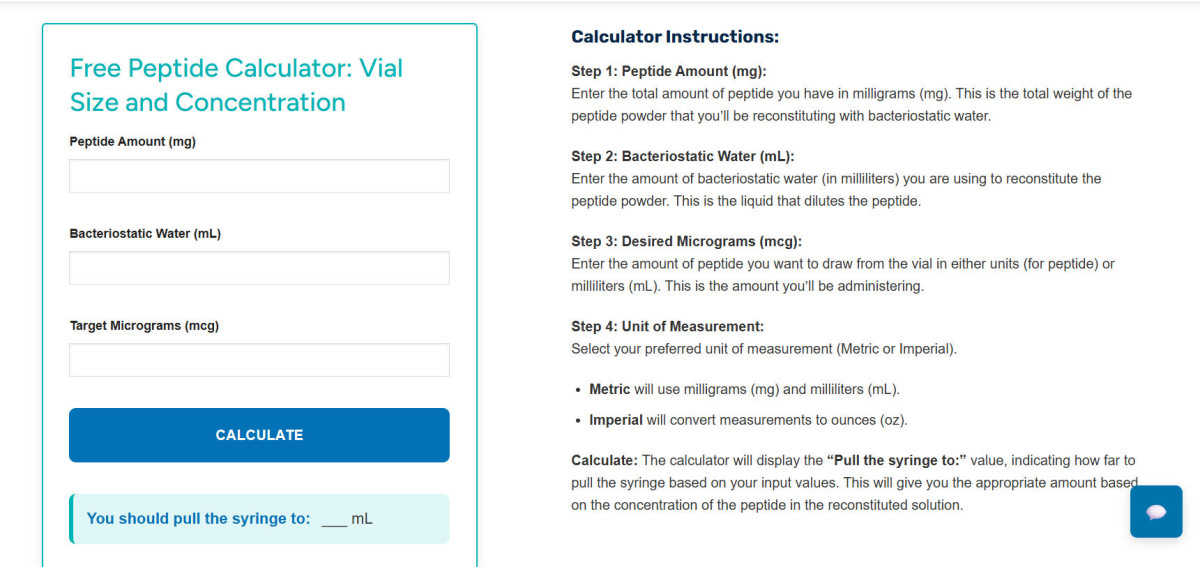
The process begins with calculating peptide concentration, expressed as mass divided by volume. For instance, concentration in mg/mL equals peptide mass in mg divided by diluent volume in mL. To convert to micrograms per milliliter, multiply by 1000. Molarity is derived from molecular weight: Molarity (M) = (mg/mL ÷ molecular weight (g/mol)) × 1000. Understanding unit conversions is crucial: 1 mg = 1000 mcg, and for U-100 insulin syringes, 1 mL = 100 IU. As an example, a stock solution of 5 mg/mL equals 5000 mcg/mL; to obtain 250 mcg, one would need 0.05 mL.
Reconstitution involves dissolving lyophilized peptides in an appropriate diluent while maintaining sterility. Common diluents include bacteriostatic water (for multi-use vials), sterile water (for single-use aliquots), DMSO (for hydrophobic peptides, requiring immediate dilution into aqueous buffer), and low percent acid (for charged peptides). The step-by-step process includes disinfecting the vial septum, drawing the calculated volume of diluent, injecting slowly along the vial wall, and gently swirling or flicking to dissolve. If dissolution is incomplete, brief sonication or addition of co-solvent may help. Labeling with concentration, solvent, and date is essential.
Preparing stock solutions and dilutions requires creating a concentrated primary stock and calculating working concentrations using V1 = V2 × (C2/C1). Serial dilutions offer flexibility while maintaining stability. Storage guidelines recommend keeping lyophilized peptides in a cold, dry environment (typically -20°C for short-term, -80°C for long-term), protected from light and moisture. Reconstituted peptides should be refrigerated for short-term use or frozen at -20°C or -80°C for prolonged periods, with limited freeze-thaw cycles.
Troubleshooting solubility and aggregation involves starting with gentle swirling, allowing equilibration, and using brief sonication if needed. For stubborn peptides, small amounts of DMSO or low percent acid can be added cautiously, followed by immediate dilution into aqueous buffer. Preventive strategies include proper solvent selection, slow addition to buffers, maintaining suitable pH and ionic strength, aliquoting to minimize freeze-thaw cycles, and avoiding repeated exposure to room temperature. If aggregation persists, replacing the peptide is advisable.
Key considerations include double-checking calculations, choosing appropriate syringes for small volumes, documenting every step, ensuring sterile handling, and tracking stability with clear labeling. For more details, Loti Labs provides resources at https://lotilabs.com.