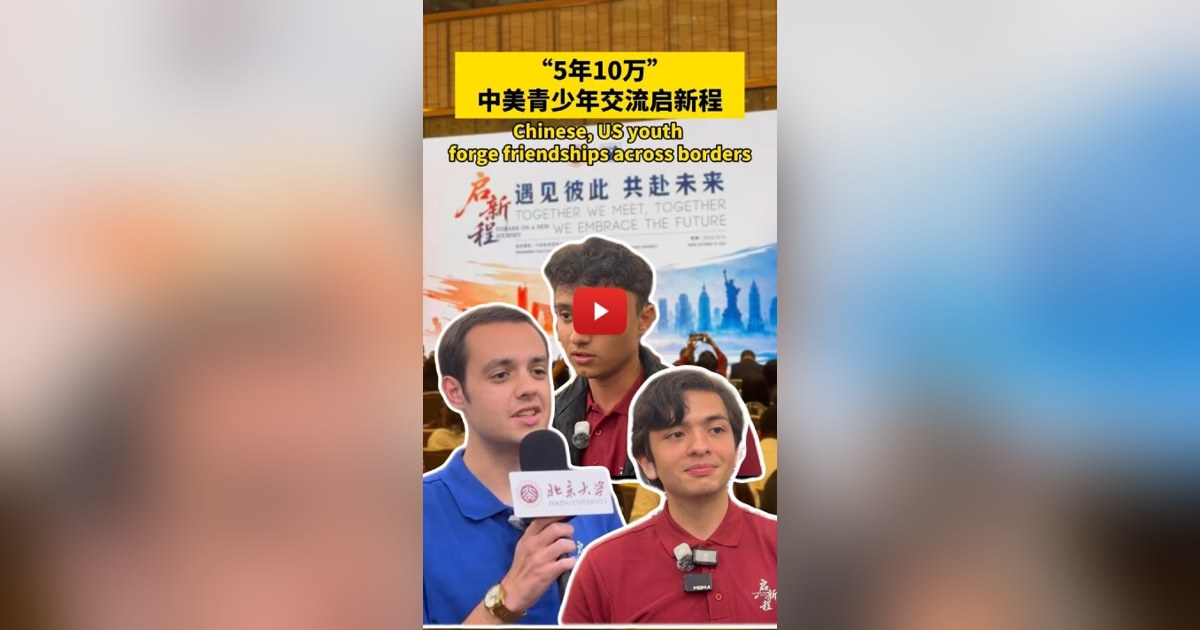
More than 200 students from China and the United States gathered in Beijing from October 12 to 14 for a youth exchange event aimed at fostering cross-cultural dialogue. The gathering was organized in response to President Xi Jinping's initiative to invite 100,000 young Americans to China over the next five years, a commitment first announced in November 2023 during the Asia-Pacific Economic Cooperation summit in San Francisco. The event represents one of the most tangible outcomes of that pledge, bringing together students from diverse backgrounds to discuss shared challenges and build personal connections.
The significance of this exchange extends beyond the immediate interactions among participants. In recent years, US-China relations have been strained by disputes over trade, technology, and geopolitical influence. Official diplomatic channels have often been fraught with tension, making people-to-people exchanges a vital alternative avenue for maintaining communication and mutual understanding. By investing in youth engagement, both governments signal that they value long-term relationship-building over short-term tactical gains. The students who participated are likely to become future leaders in business, academia, and government, and the friendships formed now could help mitigate misunderstandings later.
According to the announcement, the event featured panel discussions, cultural performances, and collaborative projects designed to break down stereotypes and encourage open dialogue. Participants reportedly explored topics such as climate change, entrepreneurship, and education reform, areas where bilateral cooperation remains essential. The initiative also aligns with broader efforts to revive educational exchanges that had declined during the COVID-19 pandemic and subsequent political tensions. As reported by Media OutReach Newswire, the exchange is part of a sustained push to rebuild people-to-people ties.
Observers note that such exchanges can have a ripple effect. When young Americans visit China, they gain firsthand experience that counters one-dimensional narratives often portrayed in media. Similarly, Chinese students benefit from direct interaction with American peers, fostering a more nuanced view of the United States. These personal experiences can influence public opinion and ultimately shape policy environments in both countries. Moreover, the initiative may encourage other institutions, such as universities and NGOs, to launch similar programs, amplifying the impact.
For those interested in the event's details, a video recap is available at https://www.chinadaily.com.cn/a/202610/16/WS6ad1f5d7e4b06d4aa05633a1.html. The video highlights moments of collaboration and camaraderie, underscoring the potential of youth diplomacy. While the event itself is a single chapter, it reflects a broader strategic choice: to invest in human connections even when political winds are unfavorable. The success of Xi's 100,000-person goal will depend on sustained funding, visa facilitation, and continued political will. If achieved, it could create a network of American alumni with deep familiarity with China, similar to the impact of the Fulbright program in earlier decades. For now, the Beijing exchange stands as a reminder that grassroots engagement can complement, and sometimes transcend, official diplomacy.