A brief video conversation at the 27th China Annual Conference & Expo for International Education (CACIE) has added a new chapter to a cross-border green story that spans 26 years, highlighting how personal friendships can bridge cultural divides and inspire international cooperation on environmental and educational fronts.
The "CACIE Talk" session in Beijing on October 30 reconnected Yin Yuzhen, a Chinese anti-desertification pioneer, Bai Fan, head of the Luoyang No. 2 Foreign Language School Education Group, and their American friend Ronald Sakolsky. During the link, Sakolsky revealed that he had launched preparations on October 1 to establish the Sakolsky Foundation, aiming to work with the China Education Association for International Exchange to build a platform for exchanges between Chinese and American teachers and students. He emphasized that communication and understanding are important bridges to a peaceful future for young people in the global village we all share.
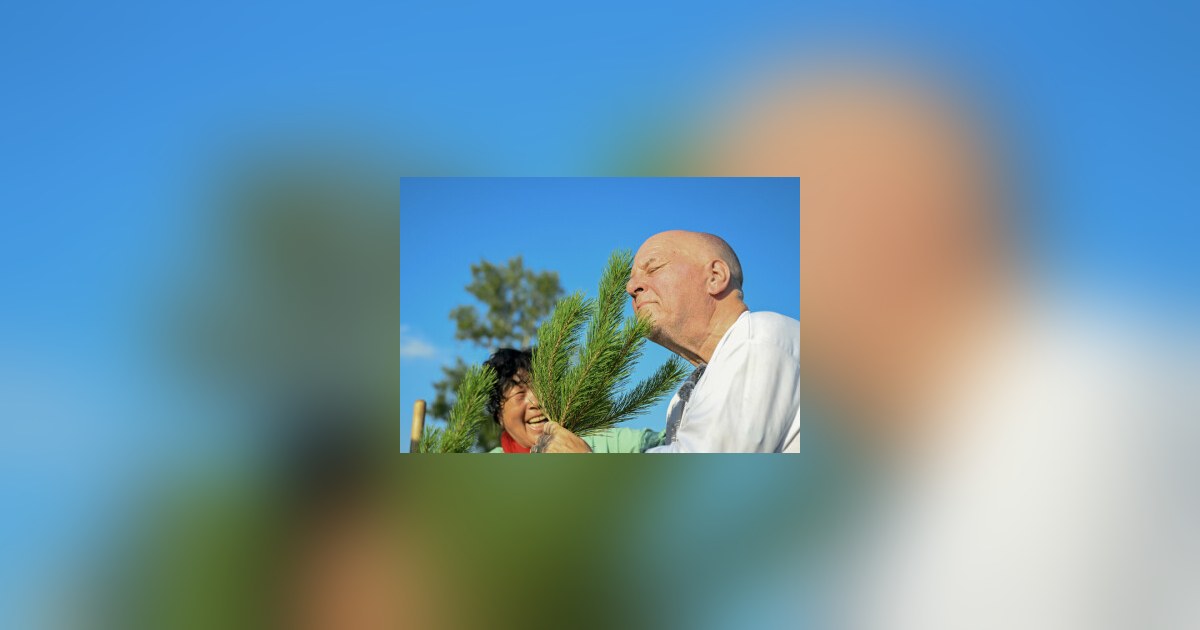
The significance of this announcement lies in its potential to institutionalize the goodwill that began in the Maowusu Sandy Land. In 1999, Sakolsky, then teaching in Luoyang, was moved by Yin's story of taking root in the desert to control desertification and raised $5,000 to support her afforestation efforts. Yin invested the entire sum in the sandy land, planting some 50,000 saplings and erecting a stone marker bearing her friend's name, while keeping one dollar as a memento. The two then lost touch for more than two decades until Yin posted a video appeal in May 2026 and located Sakolsky within 26 hours. They met in person in Ordos in August that year and walked together into the forest that now stands there.
Bai Fan noted that face-to-face cross-border educational exchanges can help young people learn tolerance and respect and see a real, multi-dimensional China. Sakolsky's foundation plan builds on this vision, using educational exchange as a bond to carry forward the goodwill that started with an ecological commitment. The story was first disseminated via Media OutReach Newswire.
The implications extend beyond education. For more than four decades, Yin Yuzhen and her husband have remained committed to the Maowusu, bringing a total of 70,000 mu (about 4,667 hectares) of barren sand under control. Today, 85 percent of the Maowusu Sandy Land in Uxin Banner has been treated, and the transformation is regarded as a model case in reversing land degradation worldwide. The area has continued to attract volunteers from many countries, and people-to-people cooperation on environmental protection has grown. On October 15 this year, Yin was named one of the inaugural "100 Women Heroes in Agrifood Systems and Rural Development" at the Food and Agriculture Organization of the United Nations (FAO) headquarters in Rome, where she joined Sakolsky and FAO Director-General Qu Dongyu in planting a crape myrtle as a symbol of friendship.
The thread of people-to-people friendship clearly runs from the saplings in the Maowusu to the crape myrtle in Rome and now to the conversation in Beijing about exchanges among young people. Sakolsky's foundation plan is meant to carry forward that goodwill, starting from an ecological commitment and using educational exchange as a bond to help more young people build connections and pass on the power of goodness and beauty. In a world often divided by cultural and political differences, such grassroots initiatives offer a reminder that shared commitments to ecological conservation and youth exchange can transcend borders and foster lasting understanding.