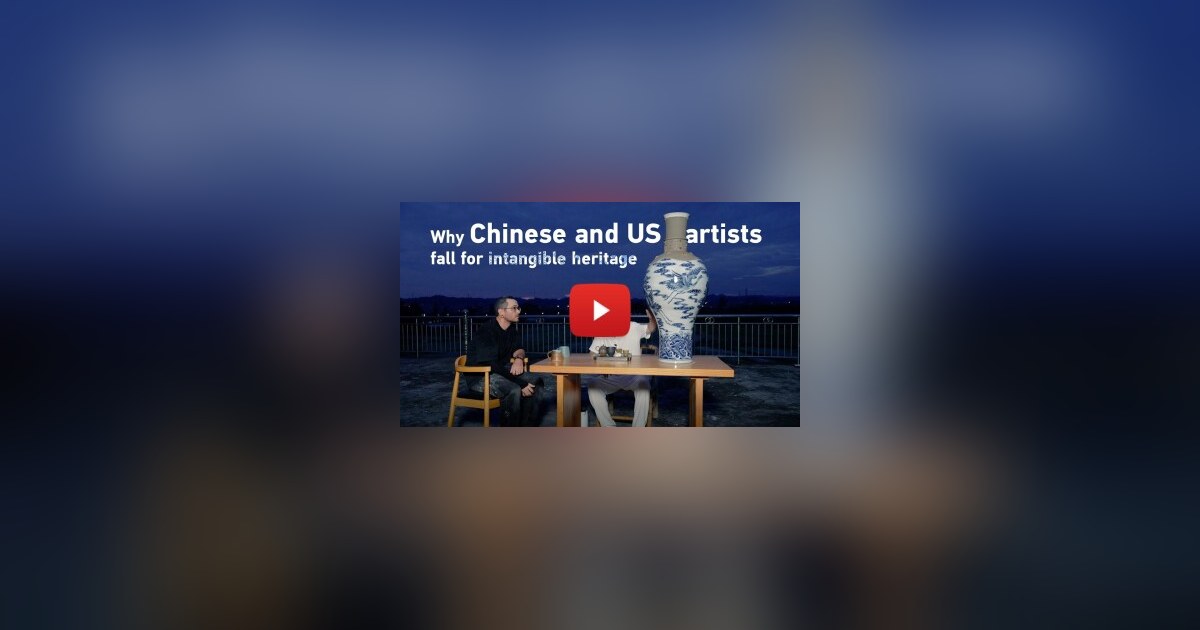
In Jingdezhen, China’s historic porcelain capital, a collaboration between American artist Michael May from Oklahoma City and local ceramic master Xie has produced a unique ceramic vessel that blends modern 3D printing with centuries-old Chinese craftsmanship. The project, reported by Media OutReach Newswire, demonstrates how digital fabrication can intersect with traditional artistry to create new forms of cultural expression.
The vessel is shaped through a combination of handcraft and 3D printing, then decorated with traditional qinghua (blue-and-white) patterns, glazed, and fired in a kiln. This process preserves the aesthetic and techniques of Jingdezhen’s renowned porcelain while incorporating the precision and geometric possibilities of additive manufacturing. The result is a one-of-a-kind artwork that embodies cross-cultural and cross-technological collaboration.
This development matters because it signals a potential shift in how traditional crafts are practiced and transmitted. Jingdezhen has long been the global center of porcelain production, with skills passed down through generations. By integrating 3D printing, artists can explore new shapes and structures that would be difficult or impossible to achieve by hand alone, potentially expanding the creative vocabulary of ceramics. At the same time, the continued use of hand-painting and kiln firing ensures that the cultural essence of blue-and-white porcelain is not lost but rather recontextualized.
The collaboration also highlights the role of international exchange in keeping heritage crafts vibrant. Michael May’s participation brings an outside perspective, while Master Xie provides deep local knowledge. Such partnerships can attract new audiences and inspire younger artisans to experiment with technology. As the global art world increasingly values both authenticity and innovation, hybrids like this vessel may become models for sustainable craft economies.
Moreover, the project underscores how technology can be a tool for cultural diplomacy. In a time of complex international relations, grassroots artistic collaborations offer a positive narrative of shared creativity and mutual respect. The vessel itself becomes a symbol of what can be achieved when different traditions and tools are brought together with care.
While the long-term impact remains to be seen, this fusion of 3D printing and Jingdezhen porcelain suggests that tradition and technology need not be at odds. Instead, they can inform and elevate each other, ensuring that ancient crafts continue to evolve in meaningful ways. The art world will be watching to see how this experiment influences both ceramic practice and cross-cultural dialogue.