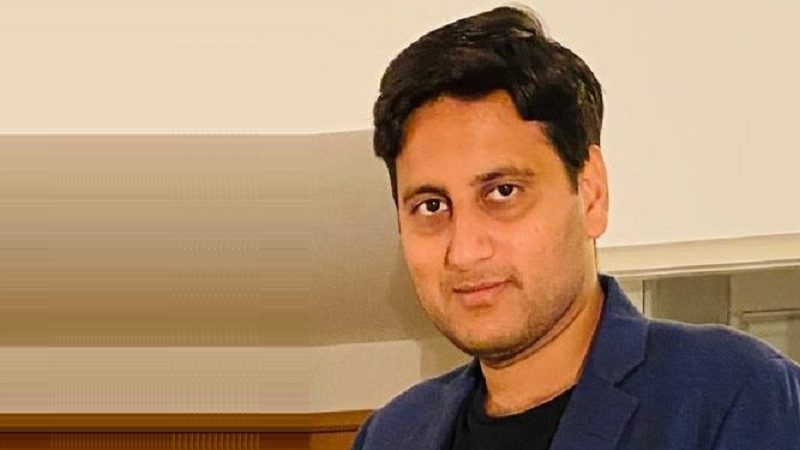
Nishchay Chadha, Chief Executive Officer and Co-Founder of Ace Green Recycling, is building what he describes as a global platform for sustainable battery recycling. The U.S.-based company has developed proprietary technologies to recycle both lead-acid and lithium-ion batteries through fully electrified processes that produce zero Scope 1 carbon emissions, zero toxic water, and zero solid waste.
Chadha, who brings nearly two decades of experience in metals, mining, and recycling from roles at Vedanta Resources and Trafigura, founded Ace to address the waste and inefficiency he observed in global recycling and mining. A visit to a recycling plant in Vietnam, where children were working in toxic conditions, solidified his commitment to proving that recycling could be both profitable and sustainable.
Ace operates two core technology platforms: GREENLEAD® for lead-acid recycling and LithiumFirst for lithium-ion recycling. GREENLEAD® recovers up to 99% of battery-grade lead with more than 99.98% purity without smelting, using a hydrometallurgical approach that reduces permitting hurdles and health risks. LithiumFirst can recover up to 80% of lithium at >99% purity from LFP batteries, positioning Ace as an early mover as LFP batteries become dominant by 2030.
The company's Grid Metallics Processing System (GMPS) further enhances lead-acid recycling by separating and processing lead paste and grids individually, avoiding the energy-intensive smelting process. GMPS integrates with GREENLEAD® to create a zero-emission solution for lead-acid battery recycling.
Ace is developing a flagship recycling facility in Texas, slated to begin operations in 2026, which will process both lead-acid and lithium-ion batteries. The facility will serve as a model for North American expansion and is supported by a long-term offtake agreement with Glencore for recovered materials. Feedstock will primarily come from domestic suppliers, creating a localized and traceable supply chain.
Strategic partnerships are central to Ace's business model. The company recently announced a partnership with Spiro, Africa's largest electric vehicle company, which selected Ace as its exclusive global recycling partner. Under this collaboration, Ace will handle end-of-life lithium-ion batteries and production waste from Spiro's manufacturing operations, while jointly developing recycling facilities across Africa and other key markets.
Internationally, Ace is deploying its licensing model across Armenia, Thailand, and India, helping partners implement clean, modular recycling solutions tailored to local markets. The company is also scaling up its lithium-ion (LFP) recycling operations in India and expanding its non-smelting lead recycling footprint worldwide.
Chadha emphasized that Ace's platform monetizes battery recycling through a mix of owned facilities, joint ventures, licensing, and service contracts, providing flexibility to enter new markets quickly. As the company moves from development to large-scale execution, Chadha expressed excitement about proving that industrial recycling can be both profitable and sustainable without relying on furnaces or toxic emissions.